
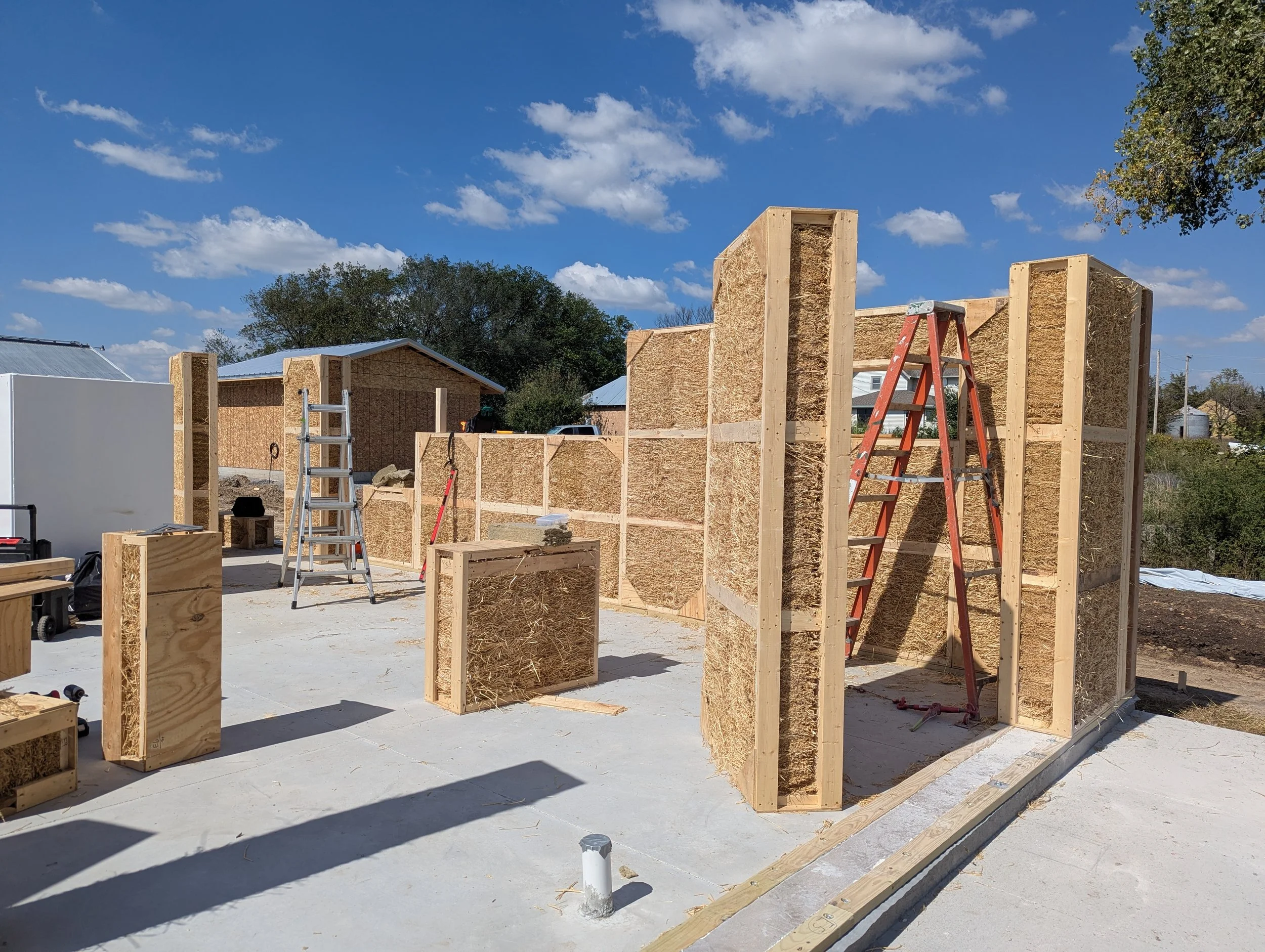
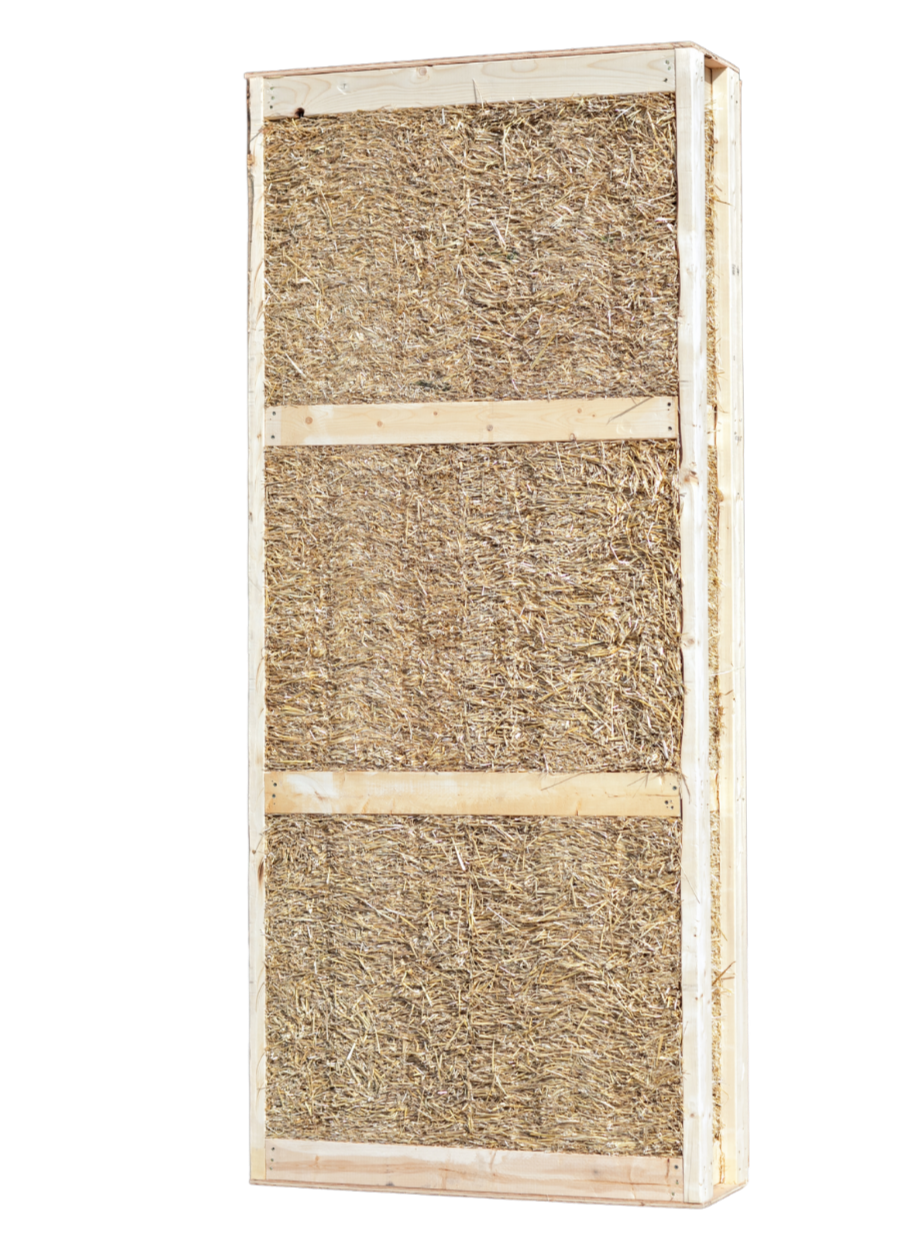
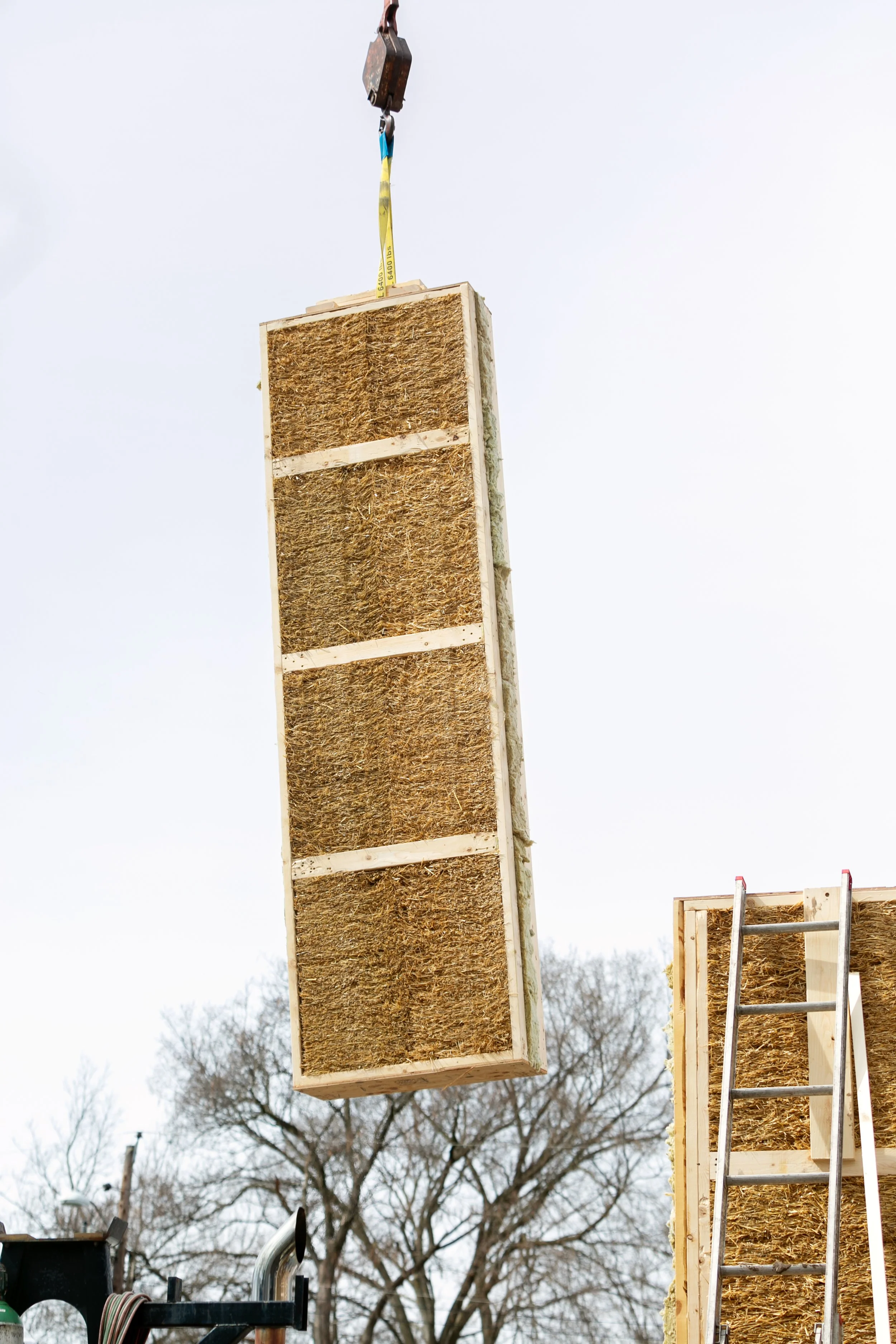
Straw panel construction offers a high-performance, low-carbon approach to building—combining natural materials with modern prefabrication. With excellent insulation, adaptable detailing strategies, and compatibility with a range of finishes, straw panels support durable, vapor-open wall systems suited to diverse climates and project types.
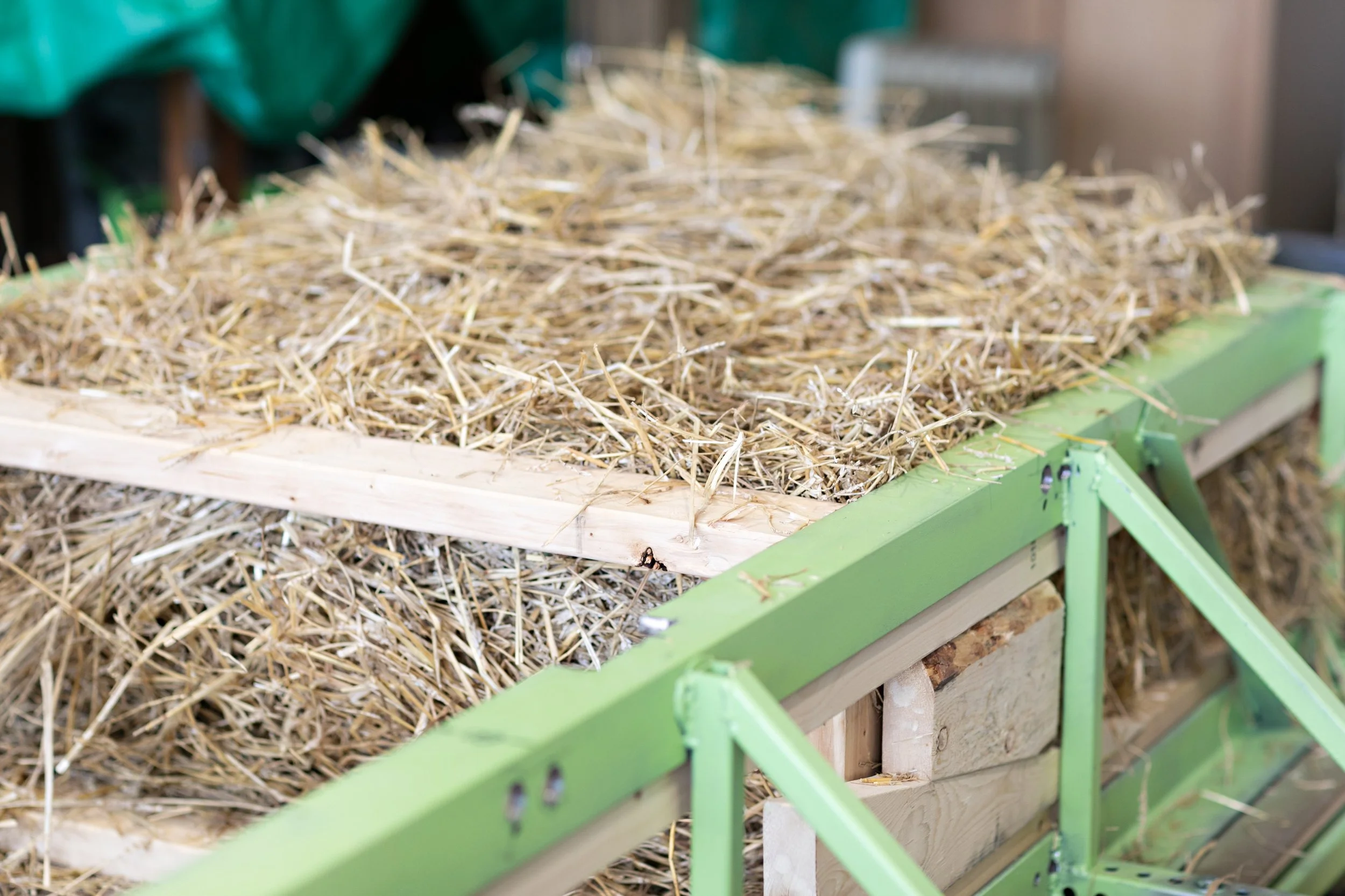
Straw panels are typically 14” thick, but total wall thickness depends on several factors. X” Sheathing is typically used for shear strength, and in such case, the exterior side can be finished out with a vapor-open WRB (weather resistive barrier), such as Adhero, and siding over a ventilated rainscreen. However, other methods of achieving necessary shear values can be engineered so that exterior earthen or lime plaster can be applied directly to the straw.
-
Straw SIPs make a highly insulated wall. University testing puts 14” straw walls at an R-value of 38-40. Because straw is a natural product, and it can be harvested from different species of cereal grains (wheat, rye, oats, barley), minor performance variations are to be expected.
-
The 2015 IRC’s (International Residential Code) prescriptive Appendix for Strawbale Construction paved the way for straw to be more widely used in residential applications in the United States. Prefabricated straw panels are also applicable for small commercial projects. Straw panels are increasingly being used on multi-story, mixed use structures in Europe and in certain Authorities Having Jurisdiction in the U.S. prefabricated straw panels are being explored for these building typologies.
Interior Finishes
The interior side can be finished with earthen or lime plaster, or panels can be covered with a vapor variable membrane, such as Intello. Inboard of the interior membrane, a shallow service cavity for electrical and plumbing can be installed and then finished out with drywall, wood paneling, etc.

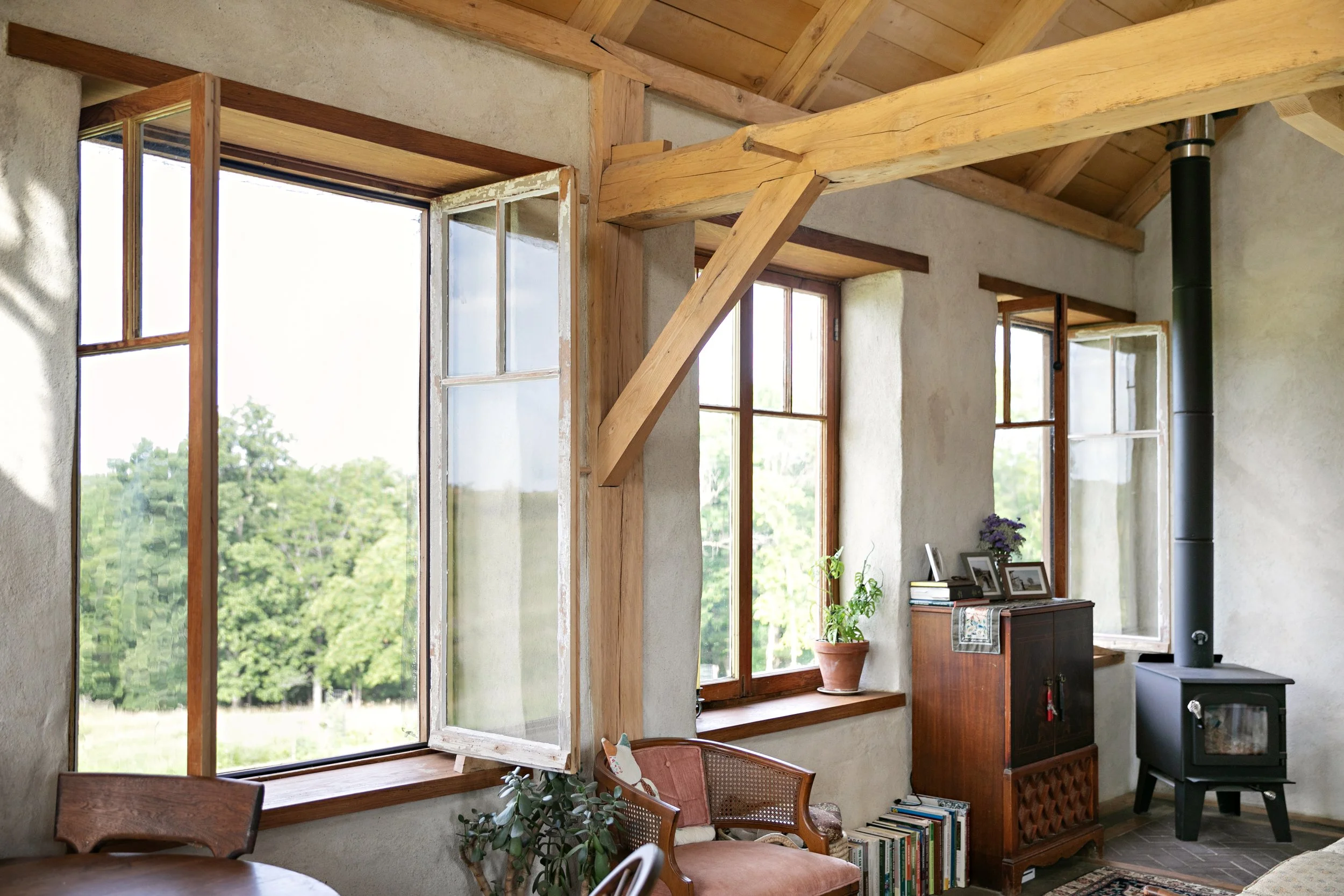
Panels are typically 39” wide, but custom widths can be produced. Panels can be a maximum of 14’ tall, but additional framing members, such as LVLs, may be necessary. Generally the exterior wythe of framing carries roof loads, however, the interior wythe can be engineered to accept a ledger to support a second floor, for example. And, one-off structural members can be inserted into panels to accept beams when needed. There are many considerations for how best to "panelize" a design. Building Integrity suggests reaching out early in the design process so we can advise on design adjustments or installation methods that could reduce panel complexity and cost.
Whether you’re thinking of a small home, commercial structure, or dreaming of a future large-scale development with straw, Building Integrity would love to hear from you. Our affiliation with the Seed Collaborative, a nationwide collective of straw panel producers, can help connect homeowners, architects, builders, and developers with the resources needed to get a straw panel project off the ground!