
The History of Straw Bale Construction: From Nebraska Homesteads to Modern Prefab Panels
Written By Cameron Clapp 2025
At Building Integrity, we specialize in transforming agricultural byproducts into high-performance, eco-friendly homes through the use of prefabricated strawbale systems. Imagine walls that insulate better than conventional materials, sequester carbon, and stand the test of time. Strawbale building isn't just a trend; it's a proven method with a rich history dating back over a century, revived and refined for energy savings and sustainable living. Whether you're in Missouri or beyond, join us as we explore how this technique grew from frontier necessity to modern prefab mastery.
What is Straw Bale Construction?
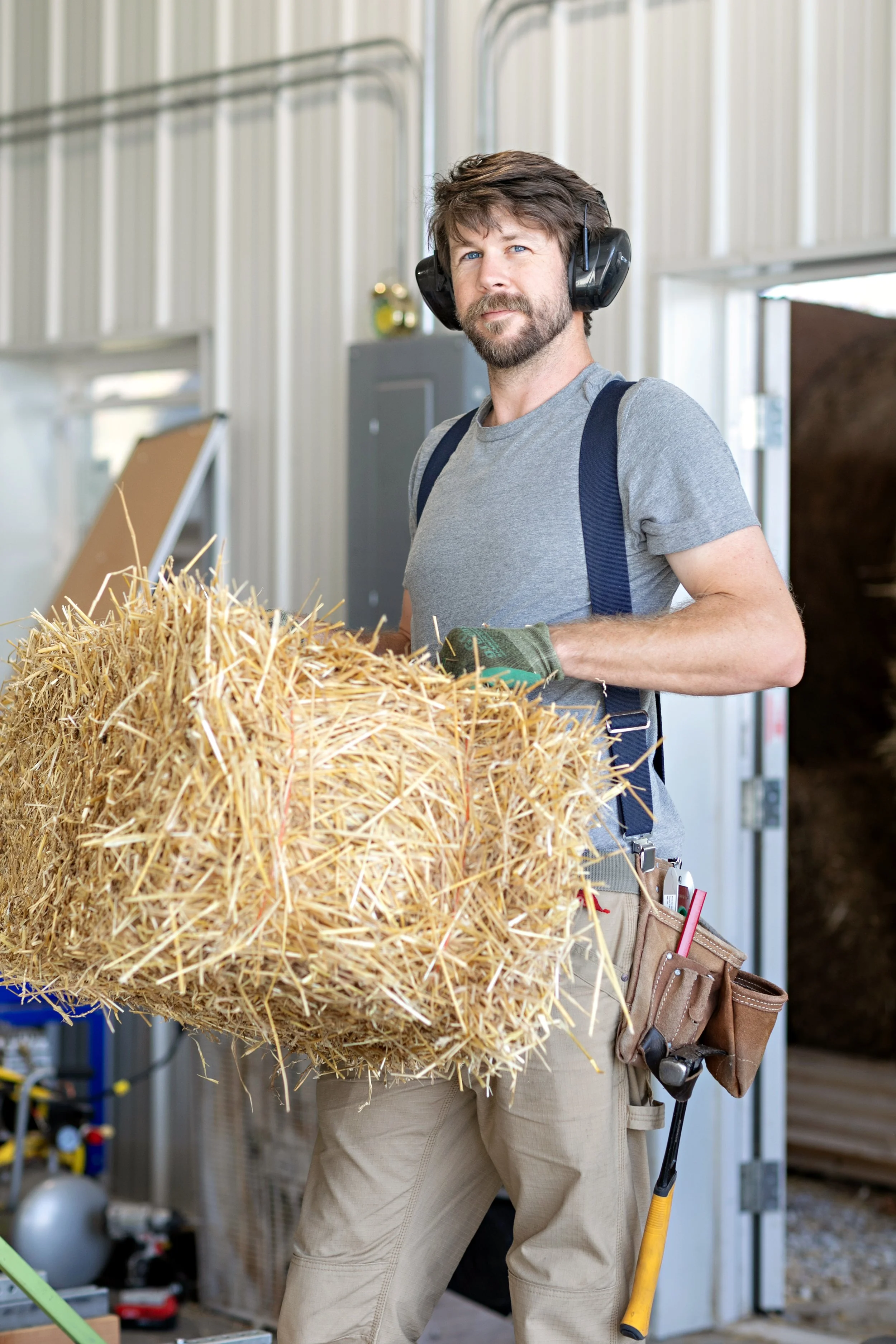
Strawbale construction is a sustainable building method that uses tightly packed bales of straw, the leftover stalks from grain crops like wheat, barley, rye, oats, or rice as the primary wall material. Straw bales are strong enough as a material to allow two separate building methods, load bearing and stick framed. In load bearing construction, straw bales are stacked like bricks in a running bond pattern and hold up the building assembly all on their own (Koh & Kraniotis, 2020). In typical stick framed construction, straw acts as an infill like conventional insulation such as cellulose or fiberglass, being fitted between studs. Once either stacked within or without a structural frame, the wall is then typically coated with natural plaster such as lime or clay. The result is a strong, breathable, and energy-efficient wall system made from common and locally available natural materials. In regards to energy, relevant research shows that using straw bales as a construction material could reduce energy consumption up to about 83.12%. as well as decrease embodied carbon up to 76% compared to the conventional buildings (Mehravar et al., 2021).
Where did it all start?
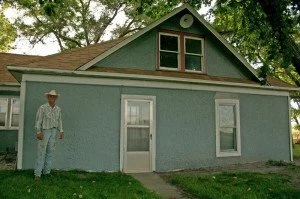
For Straw Bale construction, it all began with the widespread use of baling machines for straw in the late 1800s which allowed straw to be bundled into bales. However the use of straw in the building environment in general stretches back 10,000 years or more (Trigger, B. G. 2006). The widespread use of baling machines are best associated with the groundwork laid out by Charles B Withington from Wisconsin in 1872. (Patent Number: US 123967) in which the patent outlines a mechanism for automatically binding grain or hay into bundles with a basic machine twisting wires around the hay. After hay baling became common practice among farmers, it quickly made its way into construction. In 1897, European settlers in Nebraska used hay bales in a load bearing configuration to form walls of a schoolhouse, becoming one of the first hay bale buildings (Welsch, 1972). Subsequently, builders switched from hay bales to straw bales to make use of the leftover stalks of grain, without including the nutrients that animals might be interested in. Many more strawbale structures were built after this, some still being around today like the Haslow house in Nebraska, functioning after 100 years.
How did it fall out of public eye?
For Straw Bale construction, it all began with the widespread use of baling machines for straw in the late 1800s which allowed straw to be bundled into bales. However the use of straw in the building environment in general stretches back 10,000 years or more (Trigger, B. G. 2006). The widespread use of baling machines are best associated with the groundwork laid out by Charles B Withington from Wisconsin in 1872. (Patent Number: US 123967) in which the patent outlines a mechanism for automatically binding grain or hay into bundles with a basic machine twisting wires around the hay. After hay baling became common practice among farmers, it quickly made its way into construction. In 1897, European settlers in Nebraska used hay bales in a load bearing configuration to form walls of a schoolhouse, becoming one of the first hay bale buildings (Welsch, 1972). Subsequently, builders switched from hay bales to straw bales to make use of the leftover stalks of grain, without including the nutrients that animals might be interested in. Many more strawbale structures were built after this, some still being around today like the Haslow house in Nebraska, functioning after 100 years.
In the 1970s, strawbale building experienced a revival. The technique made a comeback in the US with pioneers like Mats Myhrman and Judy Knox organizing workshops across the Southwest, and organizations such as the Ecological Building Network and The Last Straw journal helping share design standards and testing data (Steen et al., 1999). By the 1990s, a few U.S. states began to include strawbale within their building codes; including Arizona, California, and New Mexico. Academic research conducted in the last couple of decades has confirmed its impressive fire resistance, insulation value, hygroscopic properties and low embodied carbon footprint(D’Alessandro et al., 2017). What began as a practical, frontier-era solution evolved into a modern symbol of sustainability and craftsmanship.
What about Modern Age?
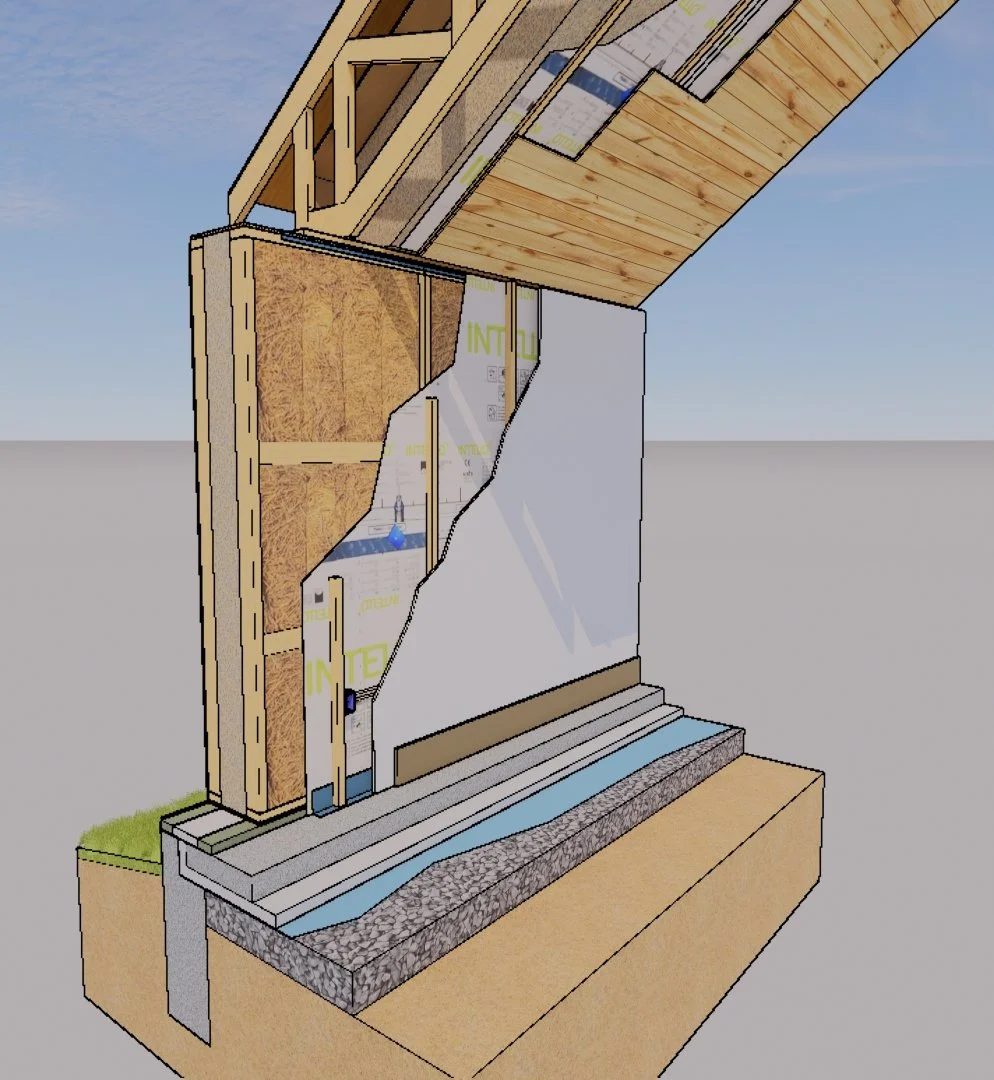
Now to the modern age. in 2012 the Seed Collaborative was developed by New Frameworks which aimed to further bolster the use of strawbale construction through the use of prefabricated panels, greatly saving on construction time, and removed the main roadblock for strawbale construction.
It’s funny to think about how this full circle has played out — in the early 1900s, populations moved from the rural to the urban, and in the early 2000s, many began moving back toward the rural. Today, Building Integrity and Monarch Architecture carry that same spirit forward through workshops created by the Seed Collaborative. By embracing prefabricated strawbale construction, we’ve transformed a traditional natural building method into an efficient, high-performance system. Prefab allows us to deliver beautiful, healthy, and century long homes in a fraction of the time.
At Building Integrity and Monarch Architecture, we see prefabrication as the key that unlocks strawbale’s full potential—where sustainability and locality meets scalability, and the craftsmanship of the past meets the innovation of the future. Discover how prefab strawbale can transform your build!
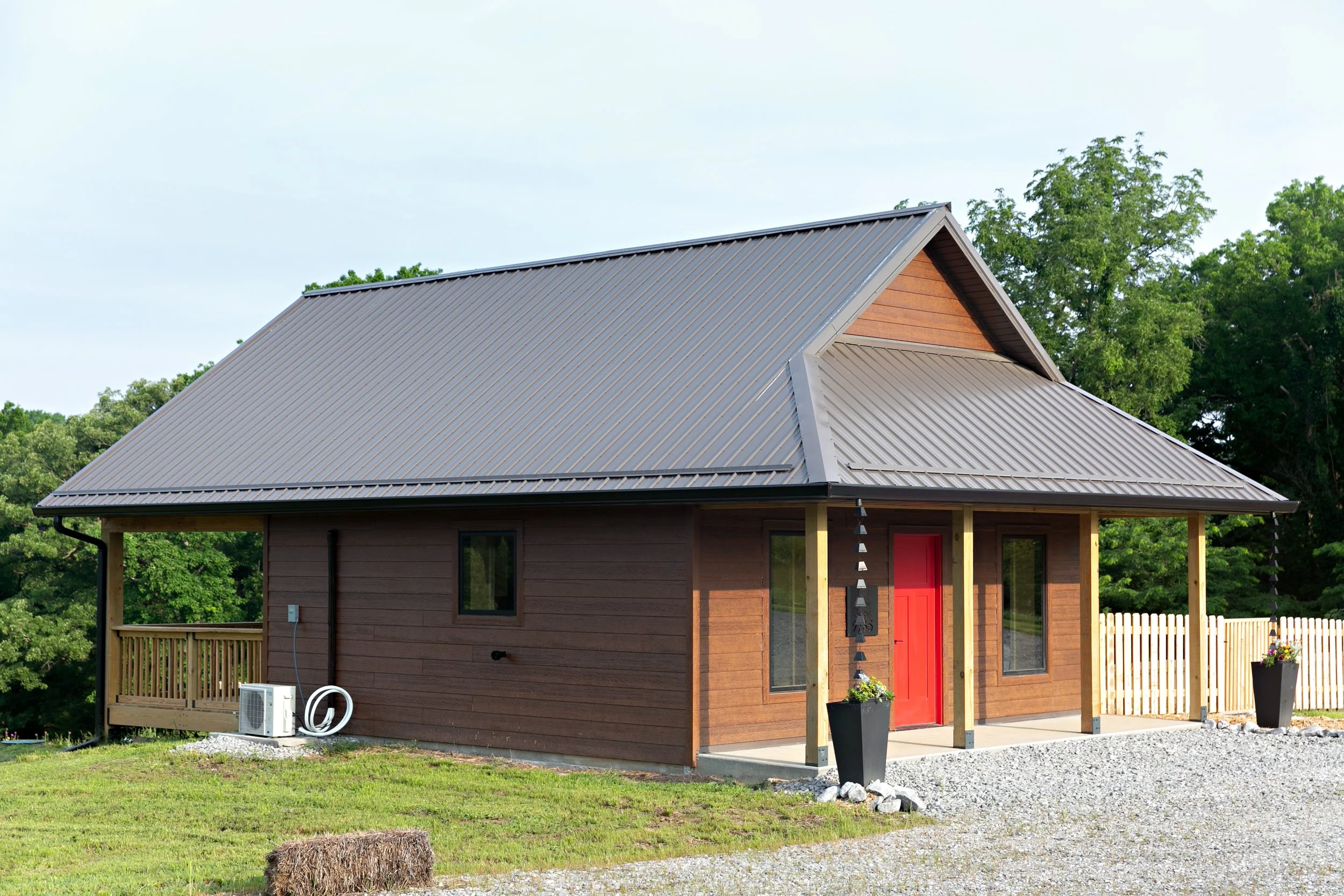
Modern Straw House
Sources
D’Alessandro, F., Bianchi, F., Baldinelli, G., Rotili, A., & Schiavoni, S. (2017). Straw Bale Constructions: Laboratory, in field and numerical assessment of Energy and Environmental Performance. Journal of Building Engineering, 11, 56–68. https://doi.org/10.1016/j.jobe.2017.03.012
Koh, C. H., & Kraniotis, D. (2020). A review of material properties and performance of Straw Bale as building material. Construction and Building Materials, 259, 120385. https://doi.org/10.1016/j.conbuildmat.2020.120385
Steen, A., Bainbridge, D., Eisenberg, D., & Steen, B. (1999). The straw bale house. Chelsea Green Publ.
Trigger, B. G. (n.d.). A history of archaeological thought. Cambridge Core. https://www.cambridge.org/core/books/history-of-archaeological-thought/E278A8C631322BAC5B5E21C88E3CEBFB
Modeling the hygrothermal response of a prefabricated straw bale panel and assessing its impact on indoor climate. (2014). 2014 ASABE Annual International Meeting, 1–11. https://doi.org/10.13031/aim.20141908185
Gross, C., Fovargue, J., Homer, P., Mander, T., Walker, P., & White, C. (2009). Lateral stability of prefabricated straw bale housing. Sustainability in Energy and Buildings, 147–154. https://doi.org/10.1007/978-3-642-03454-1_16
Mehravar, M., Veshkini, A., Veiseh, S., & Fayaz, R. (2021). Physical properties of straw bale and its effect on building energy conservation and carbon emissions in different climatic regions of Iran. Energy and Buildings, 254, 111559. https://doi.org/10.1016/j.enbuild.2021.111559
