
Prefabricated Straw Bale Construction: The Future of High-Performance Sustainable Building
Written By Cameron Clapp 2025
In our last post, we explored the roots of strawbale construction — a building method that began on the plains of Nebraska and evolved into a symbol of sustainability and craftsmanship. Today, that same natural system evolved with modern building science through prefabrication, where age-old materials meet high-efficiency design.
So what does that mean, exactly?
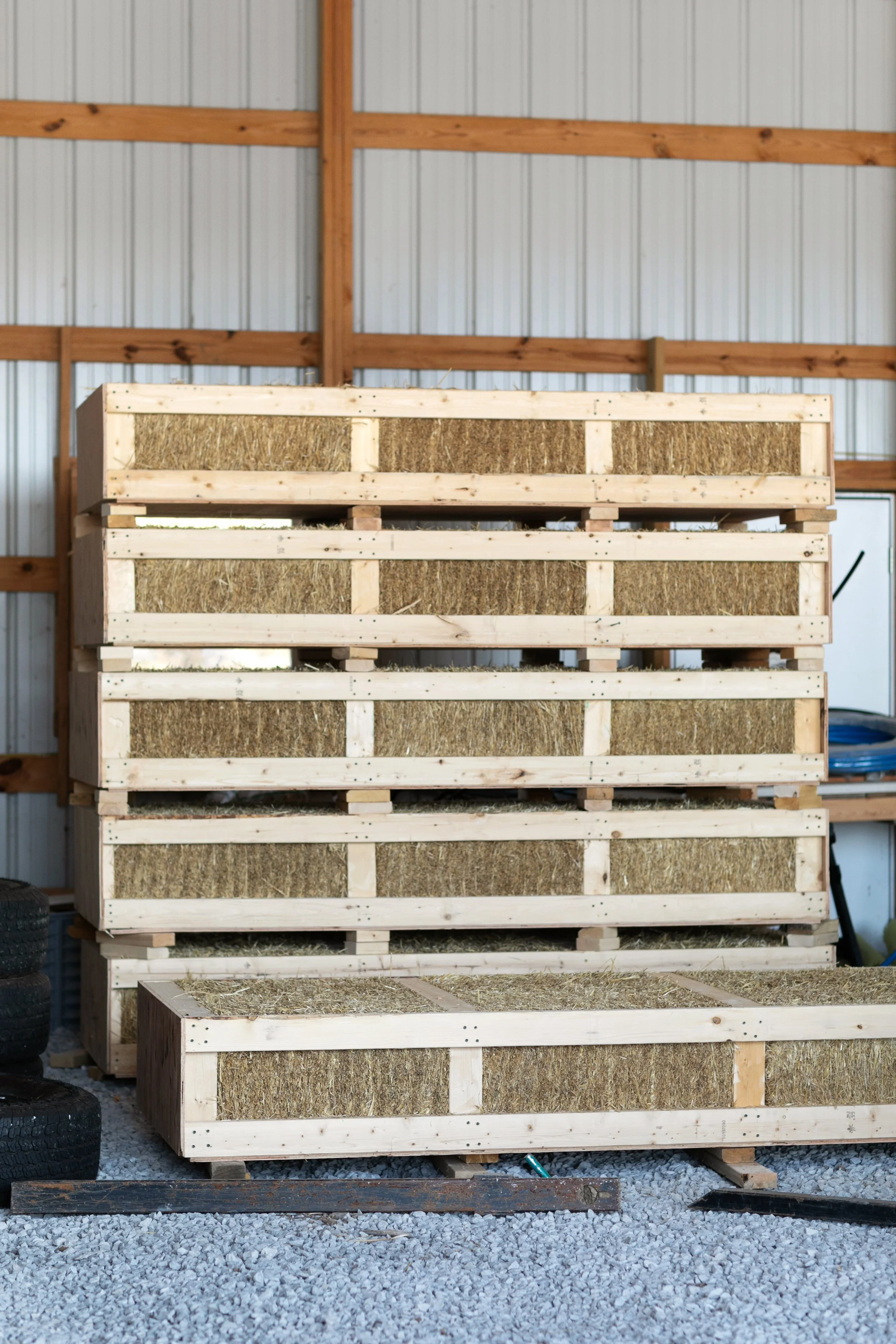
Prefabricated strawbale construction takes the straw-filled wall concept and expands on it, addressing the key issues associated with both strawbale infill and load-bearing solutions: water and labor. Prefabricated straw bale panels are constructed in a climate-controlled workshop. Each panel includes a timber frame and tightly packed bales of straw, all built and stored under controlled conditions. When delivered, the panels are craned or placed into position like large building blocks, forming a finished, high-performance shell in a matter of days. This avoids issues of moisture and the labor-intensive assembly typical on job sites.
Addressing Historical Barriers to Strawbale Construction
The development of prefabricated strawbale panels addresses the issues that caused the decline of strawbale construction in the first place. As mentioned in the previous post on the history of strawbale, strawbale construction fell out of public view during the early 1900’s due to factors including cost, construction speed, urbanization of America, and issues around scalability, weather vulnerability, labor intensity, and structural limitations in urban settings.
Why Prefabrication Changes Everything
Speed and precision: By building indoors, panels can be produced year-round and assembled quickly, keeping projects on schedule regardless of weather. This is particularly important for straw-based construction, as the largest concern is water damage–in this case, the concern is circumvented through the prefabricated process by creating and storing panels entirely within a climate controlled workshop. Once all of the panels are created, they are moved via truck to the site, where a small crane lifts and places panels along the slab exterior. This often results in every panel for a home being assembled in 3-5 days on average. The Last Straw Magazine features a contractor who gives his take on a prefab strawbale project, stating “Installing the straw bales takes one to two weeks, depending on the complexity of the design. Using prefabricated straw panels this could be halved”. Other sources, such as BI & Monarch's most recent straw panel project in Nebraska, noted that the walls were in-place and ready for roofing within 5 days. Only 2 days for toe up, 2 days for panel, and 1 day for LVL top plate and x bracing.
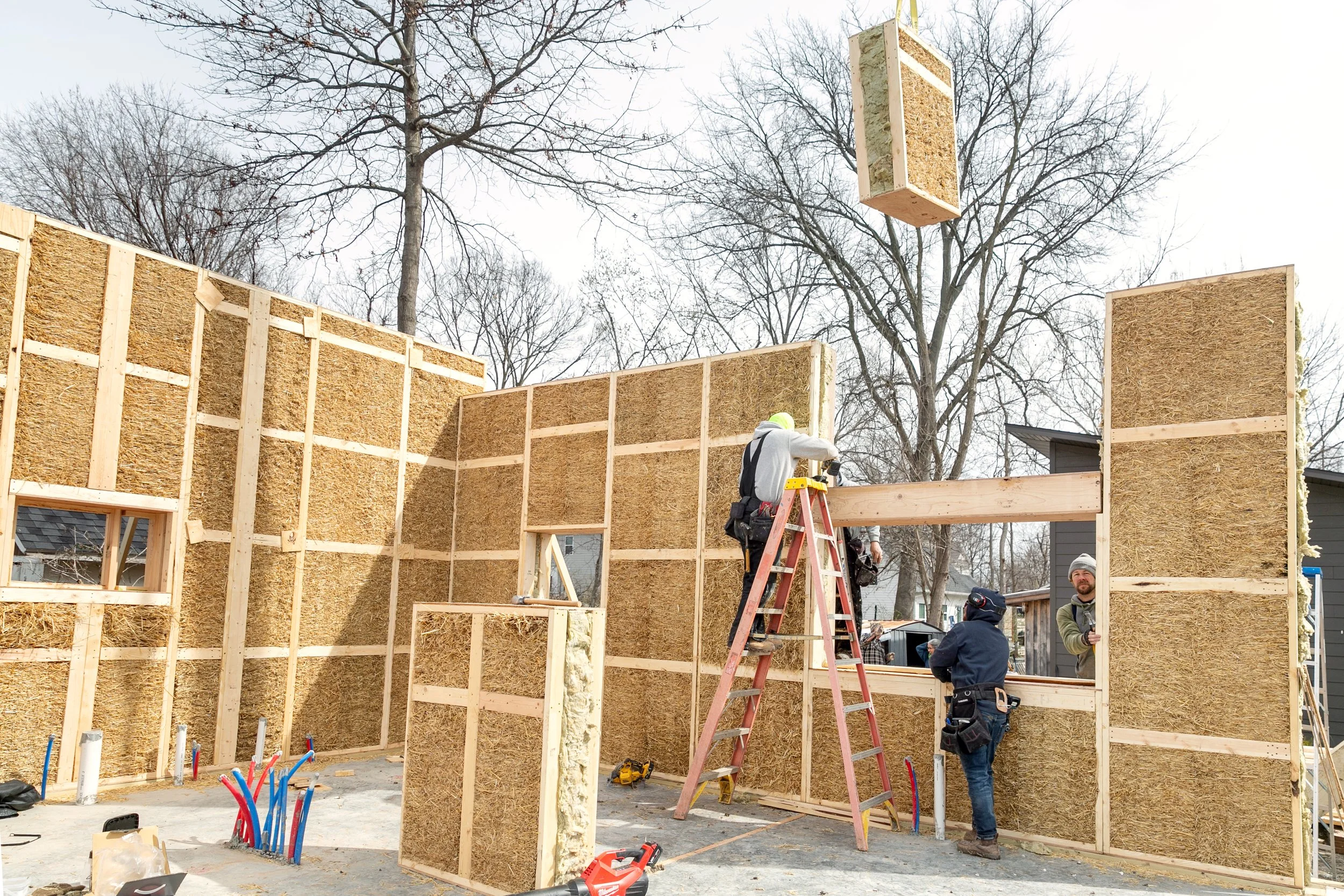
Each panel is crafted and engineered with an expert team focusing on innovating the process, with panels being specified and crafted from a collaboration of Architect, Engineers, and builders. Panels allow for guaranteed airtightness due to their compression through an air powered jig which compresses straw into a wooden frame, eliminating air gaps. The double stud nature of a panel system eliminates thermal bridging, a common problem in typical 2x4 framing (Kelley, 2023).
The advent of panel systems negates issues around structural stability, allowing for much taller structures, with records being broken all the time! As of October 2025, Hyllie Malmö is the tallest prefabricated strawbale project under construction, stretching up to 12 stories tall. Strawbale structures can theoretically reach even greater heights than this when using panels and CLT core. (Ecococon)
Sustainability and waste reduction: Prefab construction addresses issues of waste and climate. In conventional framing as much as 30% of all building materials delivered to a typical construction site can end up as waste (ScienceDirect) (Osmani 2011). Prefabricated designs can reduce this waste through their fabrication before construction. When it comes to climate, future posts will dive into all the aspects of building around the climate but for this entry, it's important to note prefabricated straw acts as a carbon sink allowing for the potential of a carbon negative building- meaning the building sequesters more carbon that it takes to produce and operate. “The carbon emissions of building materials accounts for 97% in the materialization stage, while the material transportation and construction stages contribute to only about 3%... low carbonstraw bale rural houses, the net carbon emission can be reduced by 96.75% and 76.92% compared with the reference rural houses.” (Li et al., 2021). This means with other features, such as airtight building design and a few solar panels, one could feasibly reach a carbon negative design, going beyond net zero.
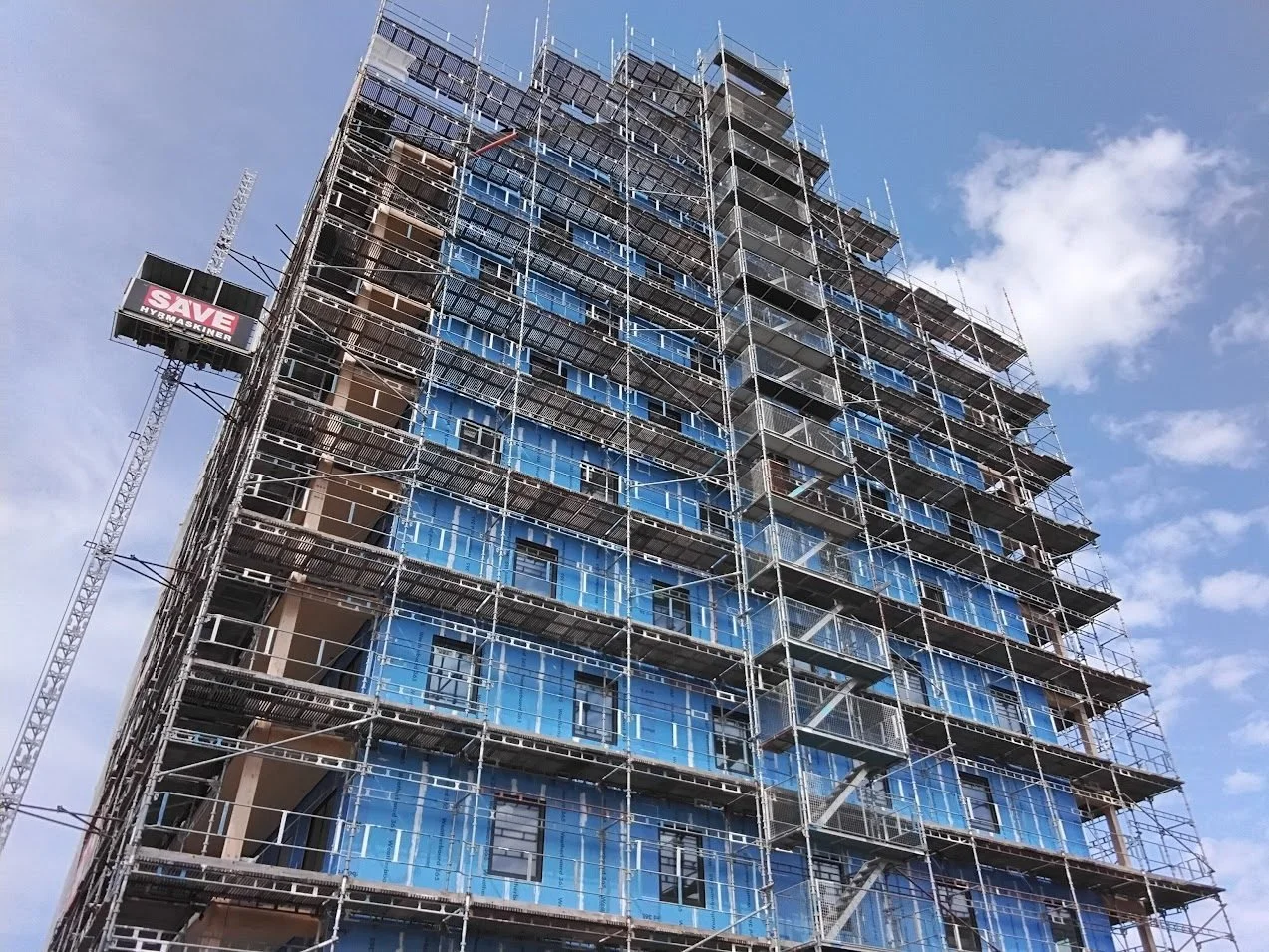
Hyllie Malmö
Local Materials, Modern Craft
At Building Integrity and Monarch Architecture, we see prefabricated strawbale as the bridge between traditional natural building and high-performance construction. Our panels use locally sourced straw from local grain farms — a renewable byproduct that’s abundant across Missouri. When it comes to grain harvesting, over 10 million acres of grain are harvested annually in the state. For reference in 2023 alone, 200,000 acres of rice area harvested, and 3.8 million acres harvested of hay, 5.5 million acres soybean, 600,000 acres harvested of wheat -(2025 Missouri agricultural outlook from rural and farm finance policy analysis center MU). By fabricating panels in advance, we streamline installation on-site, reduce labor costs, ensure consistency among a wall assembly, and ensure each project meets the highest design and energy standards. It’s a method that allows us to deliver buildings that are both deeply local and deeply resilient — built to last a century or more. greatly outlasting modern new build conventional homes, which typically only last about 50 years (Bathurst 2023).
A perfect example of this approach is the Missouri Prefab Cabin, a collaborative effort between Monarch Architecture and Building Integrity. The project features a fully prefabricated strawbale wall system that showcases both performance and beauty.
The Prefab Cabin reflects what’s possible when natural materials and modern methods come together: a home addition that is locally sourced, energy-efficient, and crafted with intention. It stands as an example of how prefabrication can make sustainable design accessible, scalable, and inspiring.
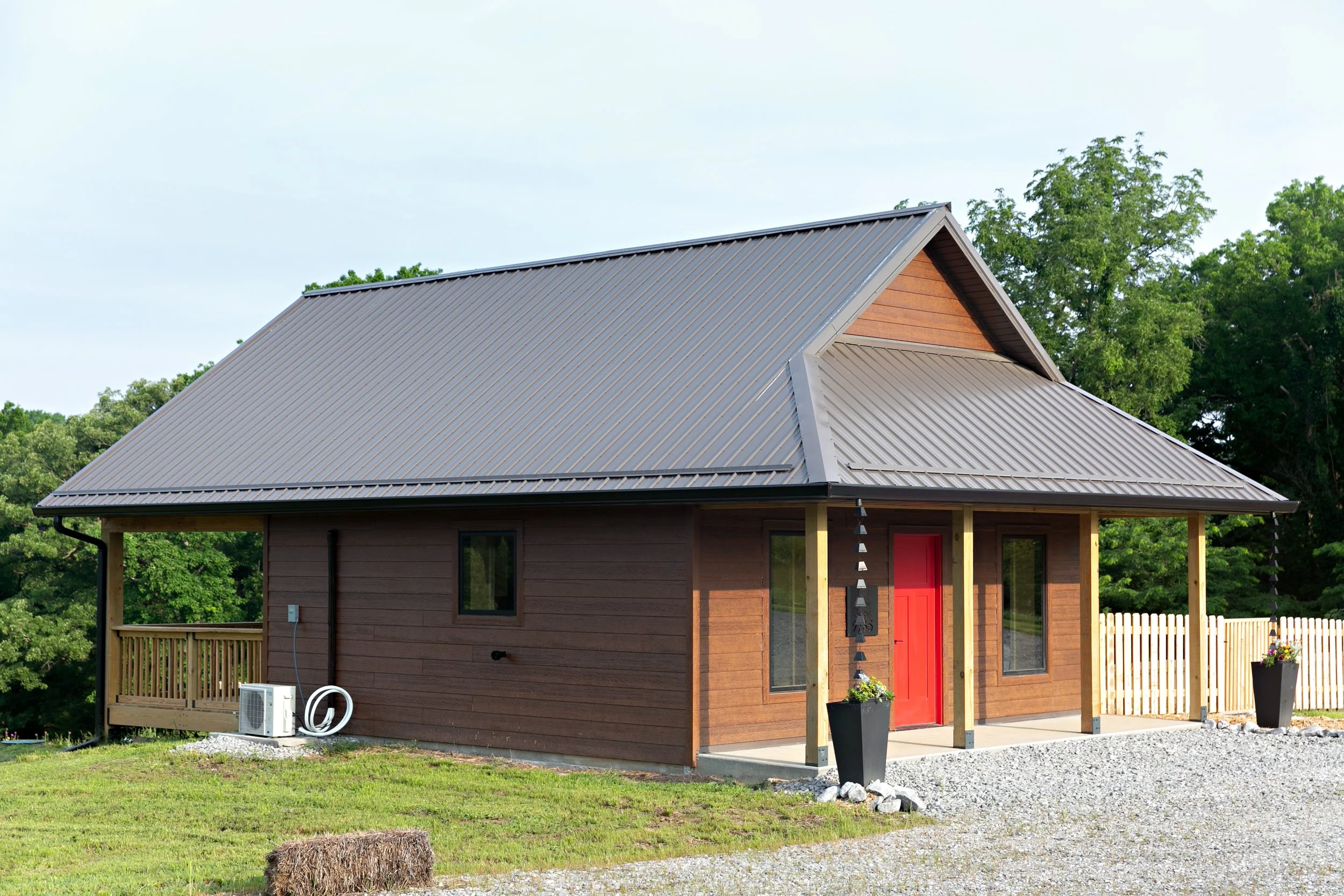
Missouri Prefab by Building Integrity LLC
Sources
Gross, C., Fovargue, J., Homer, P., Mander, T., Walker, P., & White, C. (2009). Lateral stability of prefabricated straw bale housing. Sustainability in Energy and Buildings, 147–154. https://doi.org/10.1007/978-3-642-03454-1_16
Modeling the hygrothermal response of a prefabricated straw bale panel and assessing its impact on indoor climate. (2014). 2014 ASABE Annual International Meeting, 1–11. https://doi.org/10.13031/aim.20141908185
Show-me 2025 Missouri agricultural outlook raff report #17-2024. (n.d.-a). https://ruralandfarmfinance.com/wp-content/uploads/2024/12/2025-Missouri-Agricultural-Outlook-Final-Document-.pdf
Kelley. (2023). Concept of thermal bridging in wood framed construction. https://www.huduser.gov/portal/periodicals/cityscape/vol25num1/ch18.pdf
Li, H., Luo, Z., Xu, X., Cang, Y., & Yang, L. (2021). Assessing the embodied carbon reduction potential of straw bale rural houses by hybrid life cycle assessment: A four-case study. Journal of Cleaner Production, 303, 127002. https://doi.org/10.1016/j.jclepro.2021.127002
Bathurst, M. (2023). Architectural longevity: What determines a building’s lifespan? Edgerton Center. https://architecture.mit.edu/news/architectural-longevity-what-determines-buildings-lifespan#:~:text=The%20average%20lifespan%20of%20a,years%2C%20from%20construction%20to%20demolition.
