
Building with Straw in a Coastal Climate
By Lawrence Lile, P.E. | Edited by Abigail Hillman
Coastal regions in the Southeast are some of the most difficult places in the country to build a durable home. High humidity, intense storms, and salt-laden air combine to punish building materials in ways that drier inland climates simply don't. Many homeowners in these areas have experienced the consequences firsthand: rotting floor systems, moisture-damaged framing, and mold that develops within just a few years of construction, sometimes in homes that were only recently built.
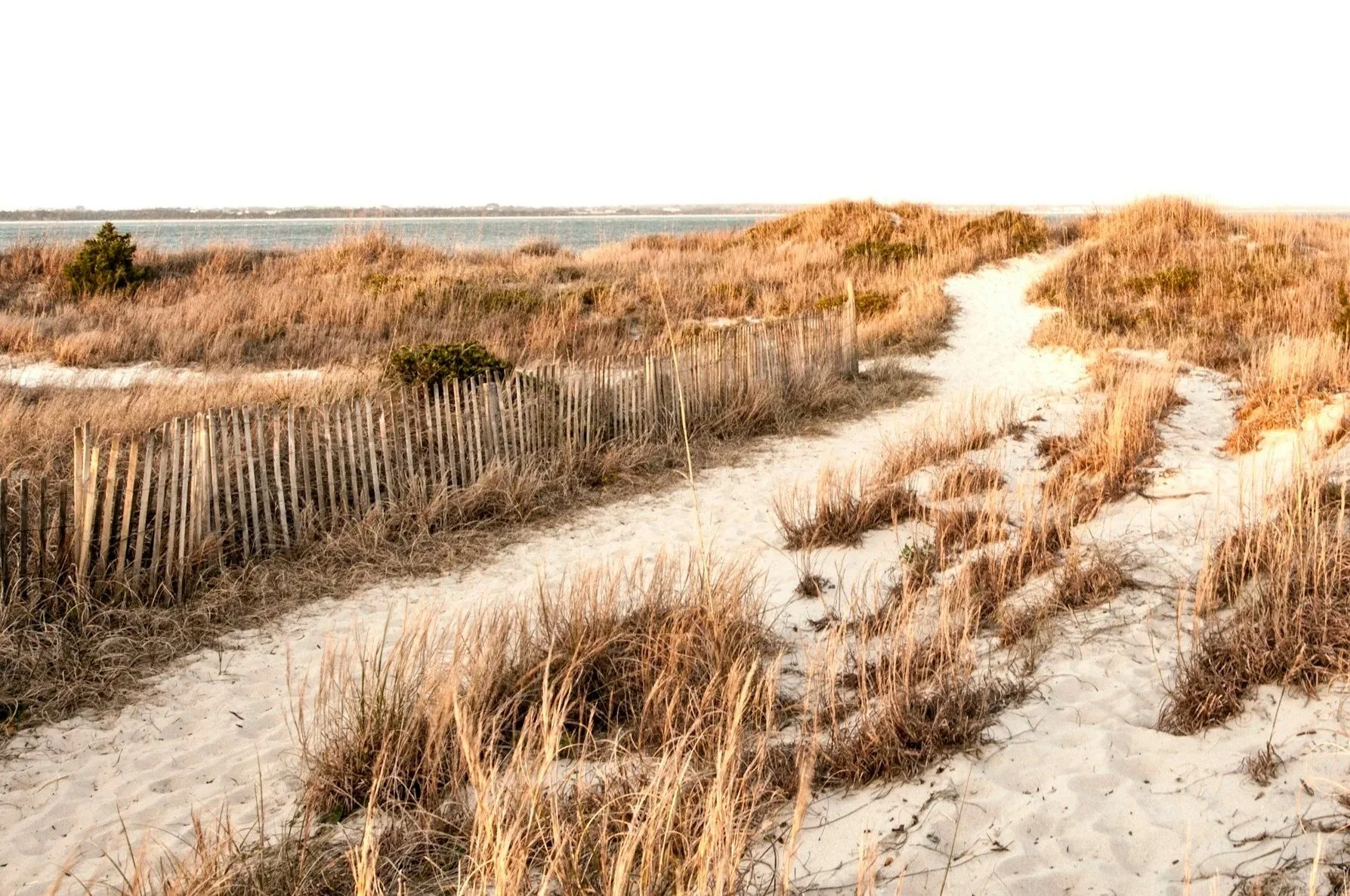
This is a challenging climate zone to build in, and problems like these are more common than they should be. In almost every building failure I’ve been asked to troubleshoot, the root cause traces back to water: moisture entry, poor drainage, and a general lack of understanding in the building industry about basic building science as it relates to moisture. The good news is that this is a solved problem. It just requires careful, climate-specific design.
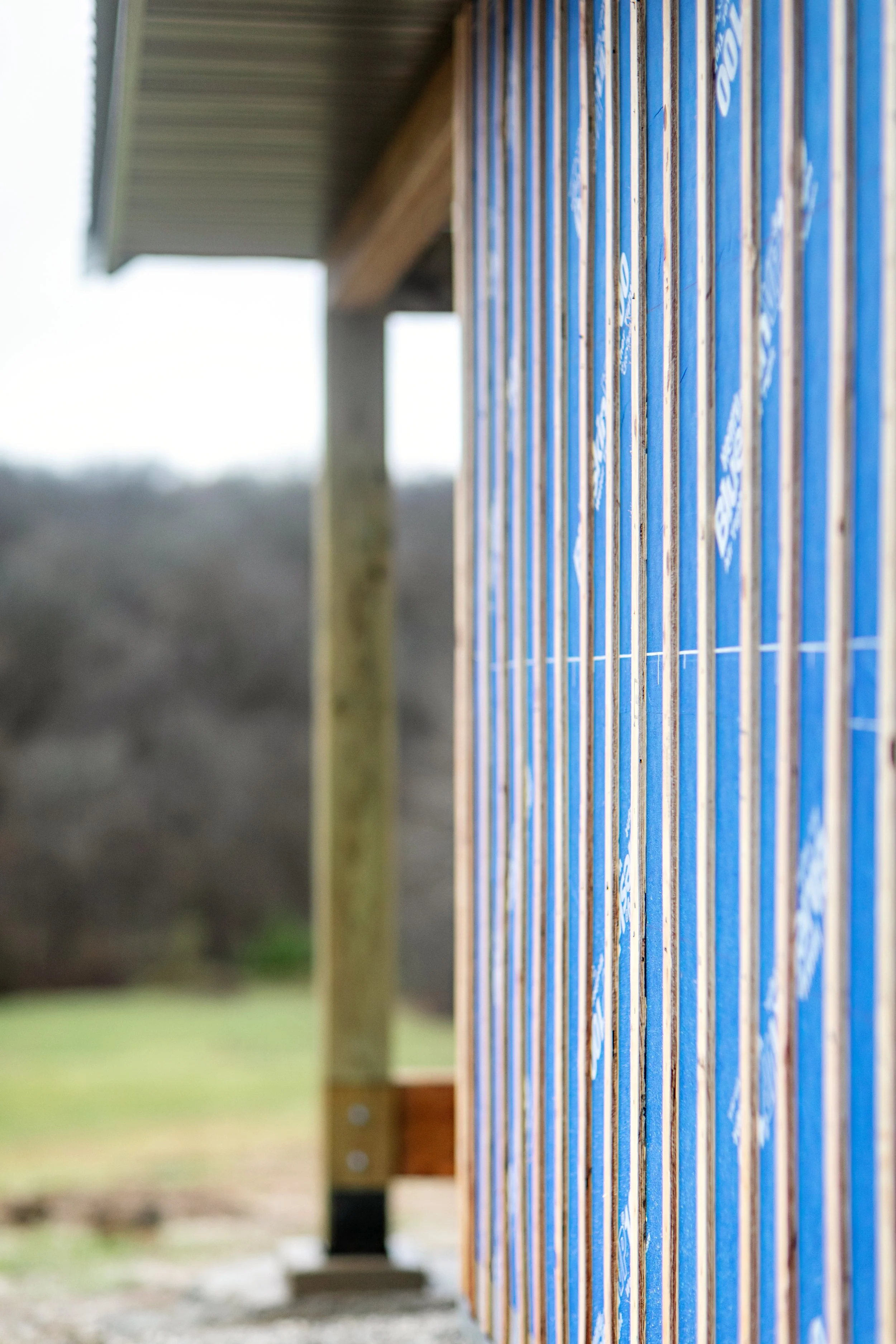
Straw panels are only one component of a home. Like any wall system, they have to be integrated into a design built specifically for the climate the home will sit in. It is entirely possible to build with straw panels in a moist coastal environment, but it requires careful attention to detailing to avoid the kind of damage described above.
Rethinking the Crawl Space Foundation
Raised crawl space foundations are extremely common across the South, and they're often built in a way that actually promotes moisture buildup rather than preventing it. The old conventional approach was to ventilate crawl spaces with a series of small vents, on the assumption that moisture would simply leave through those openings. Modern building science research has shown these vents to be inadequate, and in hot, humid climates, they can actually increase moisture levels rather than reduce them, since incoming humid air condenses on the cooler surfaces below the house. Building Science Corporation's research on conditioned crawlspaces, conducted for the U.S. Department of Energy's Building America program, found that sealed, conditioned crawl spaces significantly outperform vented ones in terms of safety, comfort, durability, and energy consumption.
The first step in addressing this is controlling moisture entry into the space itself: grading the surrounding soil to slope away from the building, and installing sump pumps or French drains that keep water from entering in the first place. Left unaddressed, most crawl spaces function more like underground swimming pools than dry structural cavities. Best practice is to pour a slab on the floor of the crawl space, seal the walls with a self-adhesive moisture barrier, and install a permanent dehumidification system, not a low-cost plug-in unit, or introduce clean, dry, dehumidified air from the central HVAC system.
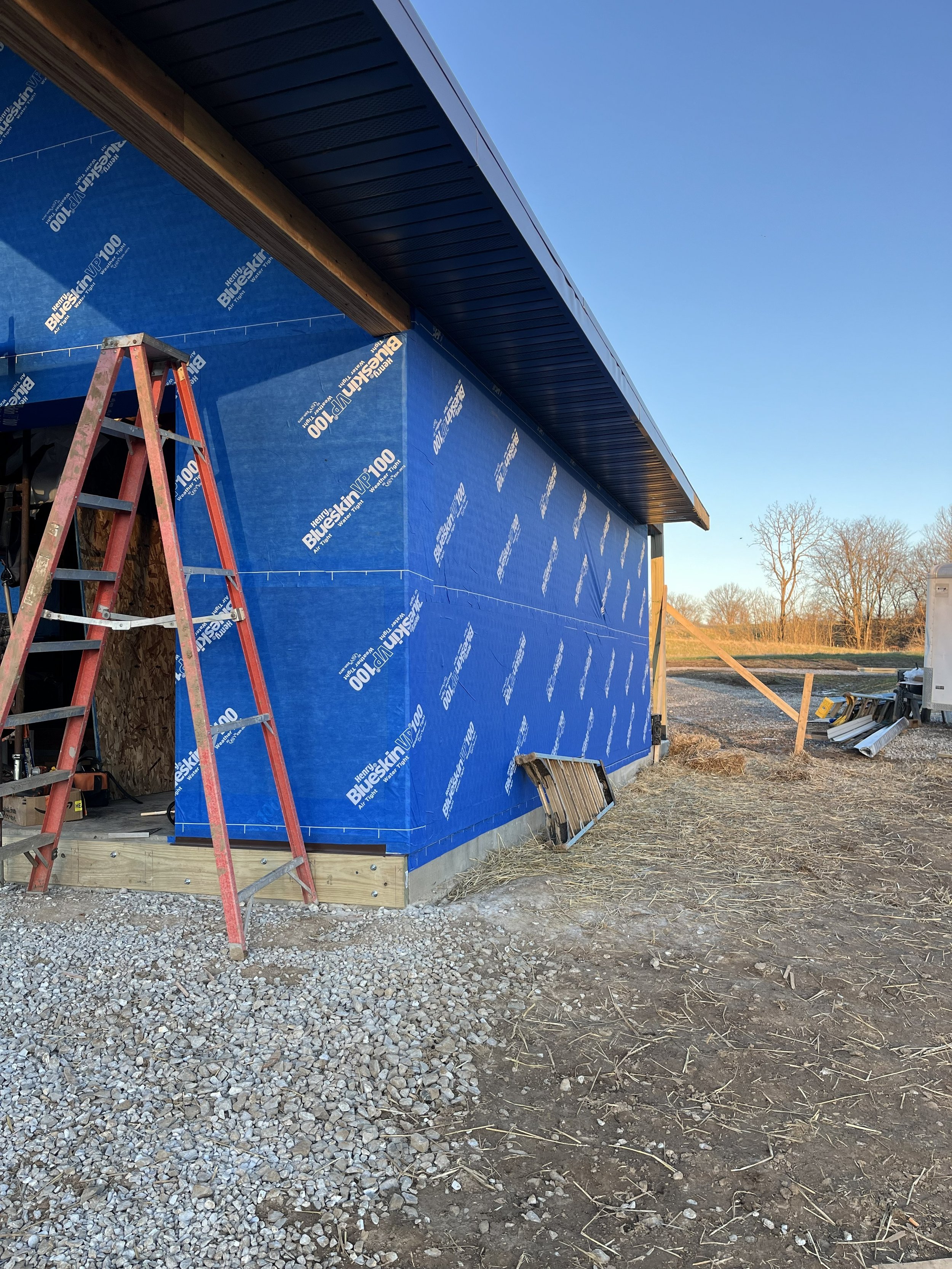
After factoring in all of that effort, it can actually be more cost-effective to forgo the crawl space altogether and build on a slab on grade instead, properly elevated above the surrounding soil with at least a 5% slope draining away from the foundation. Crawl spaces can be a significant source of mold, moisture, and rot when they aren't treated with real care, and eventually someone has to go down there to maintain or repair them. For that reason, we generally don't recommend crawl space foundations in humid coastal climates.
How a Properly Detailed Straw Panel Wall Works
A well-built straw panel wall for a hot, humid, coastal climate is made up of several distinct layers, each doing a specific job:
Exterior cladding, such as fiber cement board or lap siding
An air space, or drainage plane, formed by furring strips behind the cladding, which allows any water that gets past the exterior to drain and evaporate
A self-adhered water and air barrier, a membrane that blocks bulk moisture entry while still allowing the wall to dry. This layer is critical to a high-performing wall. Standard builder's wrap doesn't allow a wall to dry the way a purpose-built membrane does
A plywood shear layer, which provides structural wind resistance. Coastal wind regions experience intense storm loads, and a properly engineered, anchored shear system, reviewed by a local structural engineer licensed in the relevant state, is essential for both storm performance and building department approval
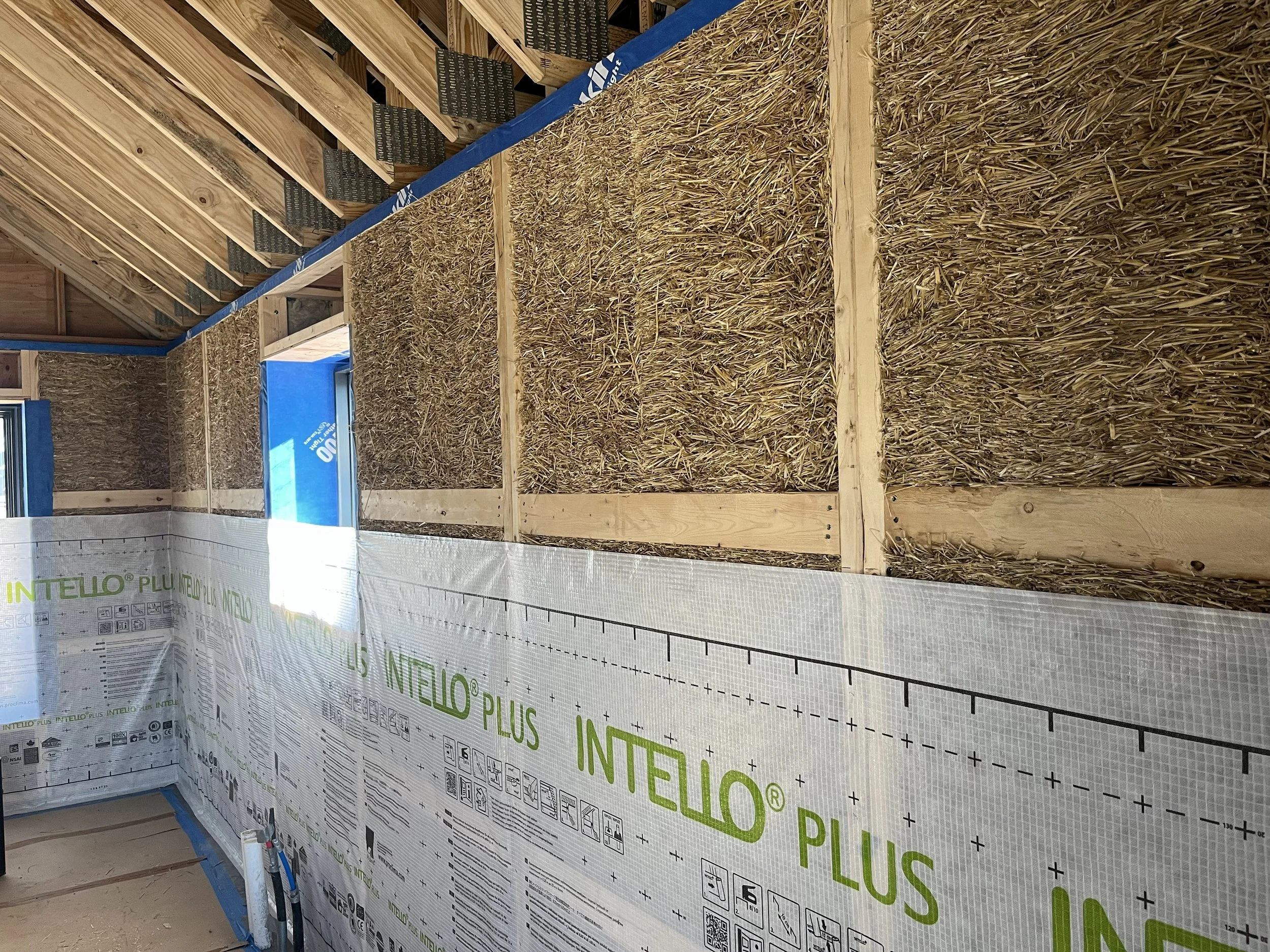
Straw panel walls, which provide thermal and sound insulation using a natural material
An interior air barrier, a membrane that allows the wall to dry while controlling air movement
Fresh air ventilation and properly sized HVAC, since a well-sealed building envelope needs a mechanical way to bring in fresh air
The Building Science Corporation's research on vapor barriers makes a point worth repeating: vapor barriers were originally intended to keep assemblies from getting wet, but in practice they often prevent assemblies from drying, which is where most of the resulting damage comes from. Moisture will find its way into a wall somehow, whether through construction, minor leaks, or normal humidity cycling. The materials described above are chosen specifically because they allow that inevitable moisture to move slowly out of the wall, rather than trapping it where it can cause rot and mold.
Ventilation and HVAC in a Tight Building Envelope
Once a home is built with the level of air sealing described above, fresh air has to be introduced deliberately. This is typically done with an energy recovery ventilation (ERV) system, paired with an air conditioning system sized and designed specifically to dehumidify, with all ductwork located entirely within the building envelope. This "build tight, ventilate right" approach is well documented in ASHRAE Standard 62.2, the residential ventilation standard developed with support from the Department of Energy's Building America program.
Oversized HVAC systems are common and tend to lead to poor dehumidification, since an oversized unit cools a space quickly without running long enough to remove humidity from the air. A dedicated whole-house dehumidifier is often a worthwhile addition in humid climates, and it's a system we recommend often.
Salt Spray and Coastal Exposure
Homes close enough to the coast to experience salt spray face an additional design consideration. Salt-laden fog and moisture from the ocean can accelerate corrosion in metal fasteners and connectors if the wrong materials are used. FEMA's technical guidance on corrosion protection for coastal construction outlines specific requirements for fastener and connector materials within coastal hazard zones, and this is a detail worth reviewing carefully during design for any home near the water.
Building for the Long Term
The principle underlying all of this is a wall's ability to dry. Building practices that were common until fairly recently relied on polyethylene sheeting and other near-impermeable moisture barriers, on the assumption that keeping water out entirely was the goal.
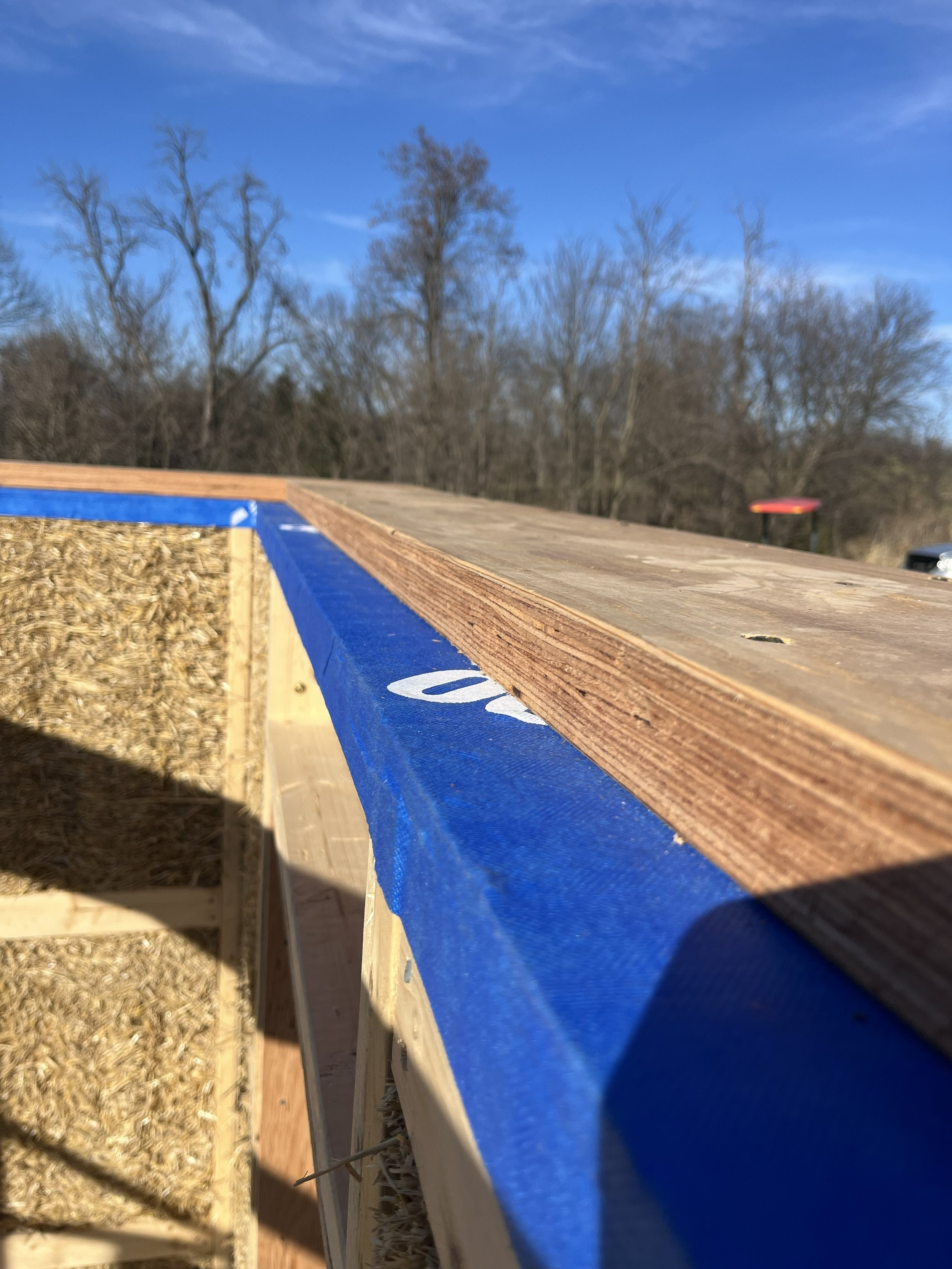
In practice, this traps whatever moisture does get in, and mold is almost always the result. High-performance assemblies work differently: they accept that moisture will find its way in occasionally, and they're designed to let it move back out.
Building in a hot, humid, coastal climate is genuinely more demanding than building inland, but it isn't a reason to give up on building naturally. With the right detailing, a straw panel home can perform well in these conditions and last for decades. We're always glad to talk through the specifics of a site and climate with homeowners and builders who are working through these questions.
Two Case Studies in Humid-Climate Straw Construction

The idea of building with straw in a hot, humid climate isn't new, and there's real-world precedent for it holding up over time. Burritt Mansion in Huntsville, Alabama, completed in 1938 and insulated with 2,200 bales of wheat straw, has stood through nearly nine decades of Alabama summers. The home was rebuilt after an earlier 1936 fire linked to its electrical system, a reminder that any building material has to be detailed correctly, and today it's maintained as a public museum by the city of Huntsville. It's a different construction method than a modern engineered straw panel, but it's a useful, long-running demonstration that dry, well-protected straw can perform for generations in a humid Southern climate.
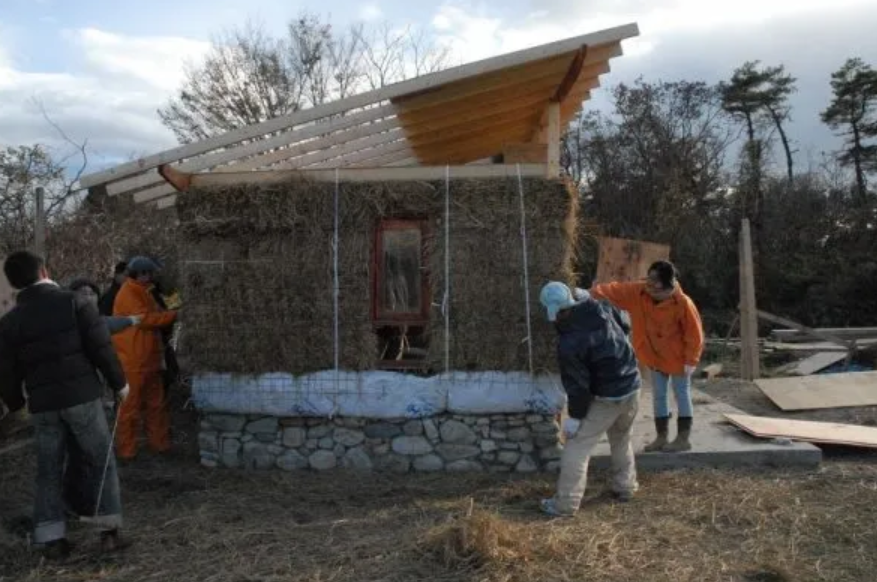
Photo Credits: The Last Straw
Japan offers a second, more direct data point, since straw building isn't a recent import there either. Rice straw has a long history in Japanese daily life, and Japan for Sustainability reportsthat the country's first modern straw-bale house was completed in Mashiko, Tochigi Prefecture, in 2001, followed shortly after by a nursery school in Kyushu and other straw buildings around the country, all built in a climate with the same combination of heat and sustained summer humidity found along the U.S. Gulf and Atlantic coasts. These homes use compressed bales of rice straw or kaya reed, finished with a clay and plaster coating that helps protect the straw from both fire and moisture. Researchers have continued to document straw-bale construction in Japan since, including load-bearing straw bale buildings studied in Tochigi Prefecture.
Sources
1. Building Science Corporation, BA-0401: Conditioned Crawlspace Construction, Performance and Codes (U.S. Department of Energy, Building America Program). [buildingscience.com](https://buildingscience.com/documents/bareports/ba-0401-conditioned-crawlspace-construction-performance-and-codes/view)
2. Building Science Corporation, BSD-106: Understanding Vapor Barriers. [buildingscience.com](https://buildingscience.com/documents/digests/bsd-106-understanding-vapor-barriers)
3. Energy Code Ace, Air-Moving Equipment (Section 7 of ASHRAE 62.2). [energycodeace.com](https://energycodeace.com/content/4610-air-moving-equipment-section-7-of-ashrae-622-from)
4. Federal Emergency Management Agency, Technical Bulletin 8: Corrosion Protection for Metal Connectors and Fasteners in Coastal Areas (National Flood Insurance Program, June 2019). [fema.gov](https://www.fema.gov/sites/default/files/2020-07/tb8-corrosion_protection_metal_connectors_coastal_areas.pdf)
5. Encyclopedia of Alabama, Burritt Mansion. [encyclopediaofalabama.org](https://encyclopediaofalabama.org/media/log-cabin-interior/)
6. Burritt on the Mountain, Dr. Burritt & The Mansion. [burrittonthemountain.com](https://burrittonthemountain.com/explore/dr-burritt-the-mansion/)
7. Japan for Sustainability, Straw Bale Houses Gaining Popularity in Japan (October 14, 2003). [japanfs.org](https://www.japanfs.org/en/news/archives/news_id025394.html)
8. The Last Straw, Straw Bale Building in Japan. [thelaststraw.org](https://www.thelaststraw.org/straw-bale-building-in-japan/)
