
The Carbon You Don't See: Embodied Emissions in Construction
By Tommy Fieser | Edited by Abigail Hillman
When people talk about the carbon footprint of a building, they usually mean the energy it uses to heat, cool, and run. This is Operational Carbon: the emissions produced over the years a building is lived in, as it draws on the grid to keep conditions comfortable.
Embodied Carbon is the other half of the equation. It's the greenhouse gas emissions produced to make, transport, and install the building materials themselves, all released before anyone has ever flipped a light switch or turned on the air conditioning.
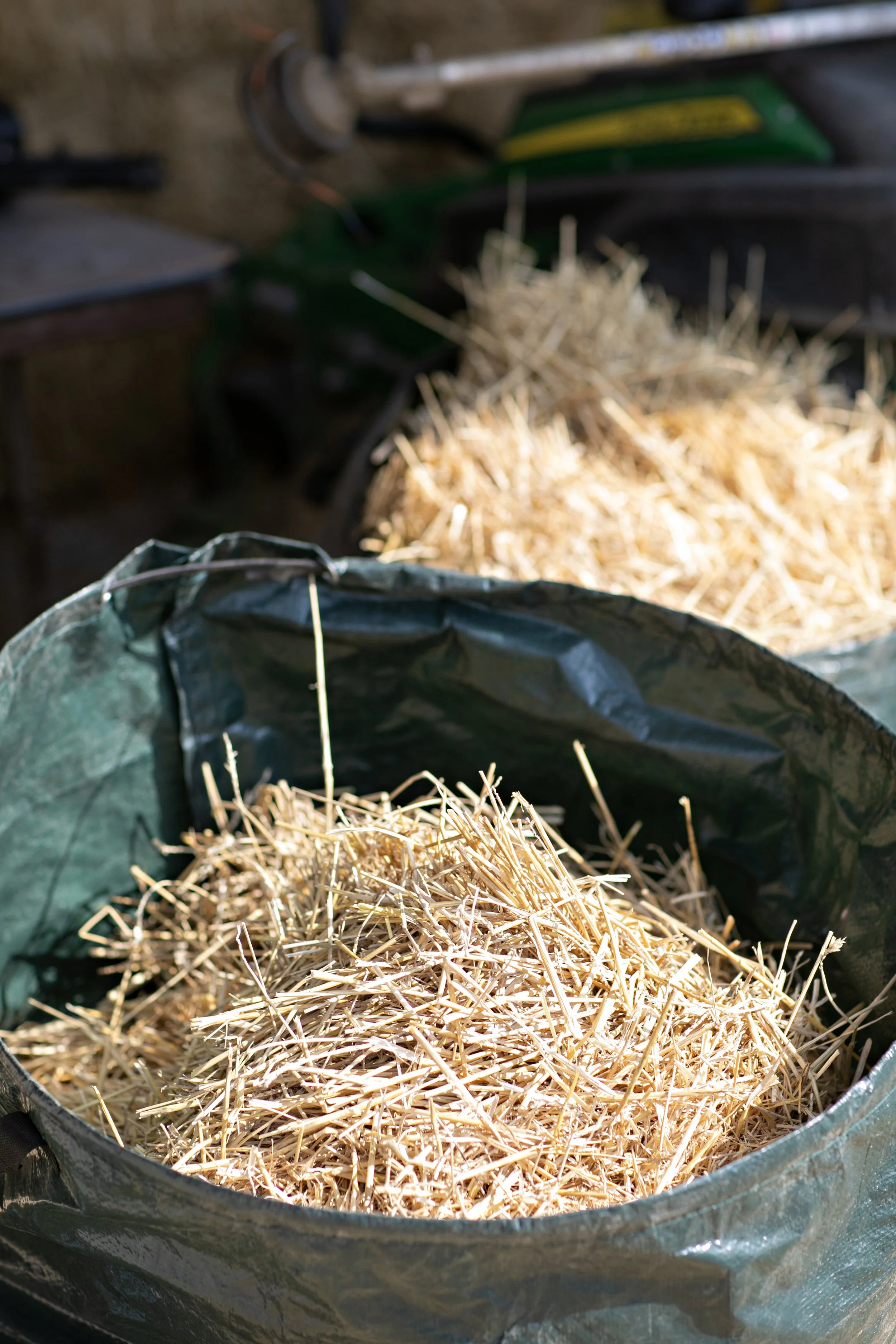
The amount of embodied carbon matters because it's emitted up front, at the moment of construction, and those emissions are locked in regardless of how efficiently the building operates afterward. A house built from concrete, steel, spray foam, and vinyl siding carries a significant embodied carbon debt from day one. A house built from straw, timber, clay, and lime starts much closer to carbon neutral, and can even be carbon positive, since straw and wood are carbon-storing materials that pulled CO2 out of the atmosphere while they were growing.
Why This Matters More Every Year
As buildings become more energy efficient and the grid gets cleaner, embodied carbon becomes proportionally more important. A peer-reviewed analysis published in the journal Buildings & Cities found that embodied carbon now accounts for roughly 50% of total life-cycle emissions in new, energy-efficient buildings on average, and can reach 100% in buildings that produce no operational emissions at all [1]. Architecture 2030, a research nonprofit focused on decarbonizing the built environment, projects that under current trends, embodied carbon will be responsible for nearly half of all emissions from buildings constructed between 2020 and 2050 [2].
In a very high-performance building, the carbon emitted during construction can rival or exceed the carbon emitted from a decade or more of operation. That means the material choices made during construction matter enormously, arguably more than the choice of light bulbs or appliances. Choosing straw over fiberglass, lime over vinyl, timber over steel, and cellulose over spray foam isn't just an aesthetic preference. It's a meaningful carbon decision.
What the Research Says About Straw
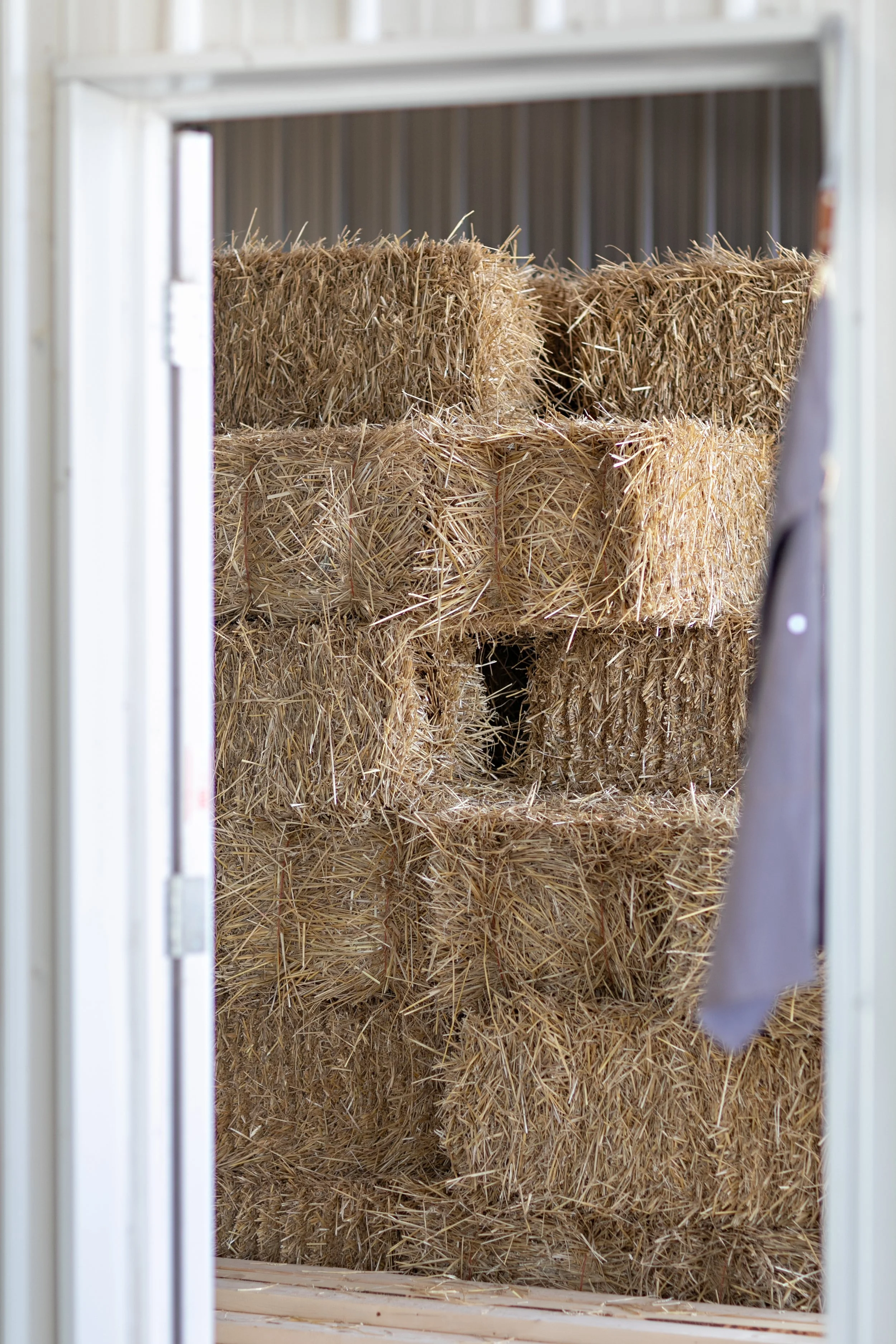
Straw's carbon-storing potential isn't just a talking point, it's been measured. A study in Building Research & Information examining a UK straw-bale social housing project found that over 15 tonnes of CO2 were stored in the biotic materials of each semi-detached home, with roughly 6 tonnes sequestered by the straw itself and the rest by wood and wood products. That stored carbon reduced the homes' whole-life emissions by 61% over a 60-year design life compared to a version built without carbon-sequestering materials [3].
A separate life-cycle comparison published through the Journal of Cleaner Production found straw bale construction achieved a net emissions saving of about 3.3 tonnes of CO2-equivalent for every tonne of straw used, and concluded that straw bale is a low-tech but genuinely effective method of carbon storage, one worth including in serious climate mitigation planning [4].
Tools for Measuring It
For anyone who wants to see these numbers applied to a specific project rather than take them on faith, the BEAM Estimator is a good place to start. Built by Builders for Climate Action under the direction of Chris Magwood, a longtime instructor at Ontario's Endeavour Centre and now part of RMI's Carbon Free Buildings Program, BEAM lets builders and designers compare the embodied carbon output of different material choices for a given project [5]. It was made free to the public on purpose. As Magwood put it when the tool launched, a climate emergency is no time for paywalls [6].
Understanding embodied carbon doesn't mean every project needs a full life-cycle assessment before ground is broken. It means recognizing that the materials chosen on day one carry consequences that last as long as the building does, and that natural, bio-based materials are one of the few tools available that can turn a construction project from a carbon source into a carbon sink.
Sources
Röck, M., et al. (2020). Embodied GHG emissions of buildings: The hidden challenge for effective climate change mitigation. Buildings & Cities.journal-buildingscities.org/articles/10.5334/bc.257
Architecture 2030. 2030 Challenge for Embodied Carbon.architecture2030.org/2030_challenges/embodied
Sodagar, B., Rai, D., Jones, B., Wihan, J., & Fieldson, R. (2011). The carbon-reduction potential of straw-bale housing. Building Research & Information, 39(1), 51–65. tandfonline.com/doi/abs/10.1080/09613218.2010.528187
Carlsson Kanyama, A., & Björklund, T. (2012). Is biochar or straw-bale construction a better carbon storage from a life cycle perspective? Journal of Cleaner Production.sciencedirect.com/science/article/abs/pii/S0957582012001188
Builders for Climate Action. BEAM Estimator.buildersforclimateaction.org/beam-estimator
Rill, R. (2022). BEAM Estimator for Measuring Embodied Carbon. GreenBuildingAdvisor.greenbuildingadvisor.com/article/beam-estimator-for-measuring-embodied-carbon
