
The Number That Tells You If Your Wall Can "Breathe"
By Tommy Fieser
"Breathable" gets used a lot in building conversations, and it rarely means the same thing twice. Sometimes people are talking about air leakage, how drafty a house feels. Sometimes they just mean a house that isn't stuffy. In this post, we mean something more specific: vapor permeance, or how easily water vapor moves through a material. That's the property that determines whether moisture can escape a wall assembly before it causes a problem, and it's measured with a number called a perm rating.
If you've spent time reading about high-performance wall assemblies, you've probably run into the word "permeance," or seen a perm rating on a product spec sheet and wondered what it meant. It's more straightforward than it looks.
What a perm rating actually measures
A perm rating measures how easily water vapor, not liquid water, but vapor, moves through a material. It's tested using a standardized lab method called ASTM E96, which places the material between two chambers with different humidity levels and measures how much vapor passes through over time (Pro Remodeler). The higher the number, the more vapor a material lets through.
Building codes sort materials into three vapor retarder classes based on this number, plus a fourth, unregulated category for highly permeable materials. This classification system comes from the International Residential Code and is widely credited to building scientist Joseph Lstiburek of Building Science Corporation (GreenBuildingAdvisor; BuildingScience.com):
Class I, Vapor Impermeable (0.1 perm or less). Polyethylene sheeting, glass, sheet metal, and foil-faced insulation fall here. A standard 6-mil poly vapor barrier tests around 0.06 perms, so almost nothing gets through (CertainTeed).
Class II, Vapor Semi-Impermeable (0.1 to 1 perm). Kraft-faced batt insulation and unfaced XPS foam are typical examples.
Class III, Vapor Semi-Permeable (1 to 10 perm). Latex and enamel paint over drywall fall in this range, along with many house wraps.
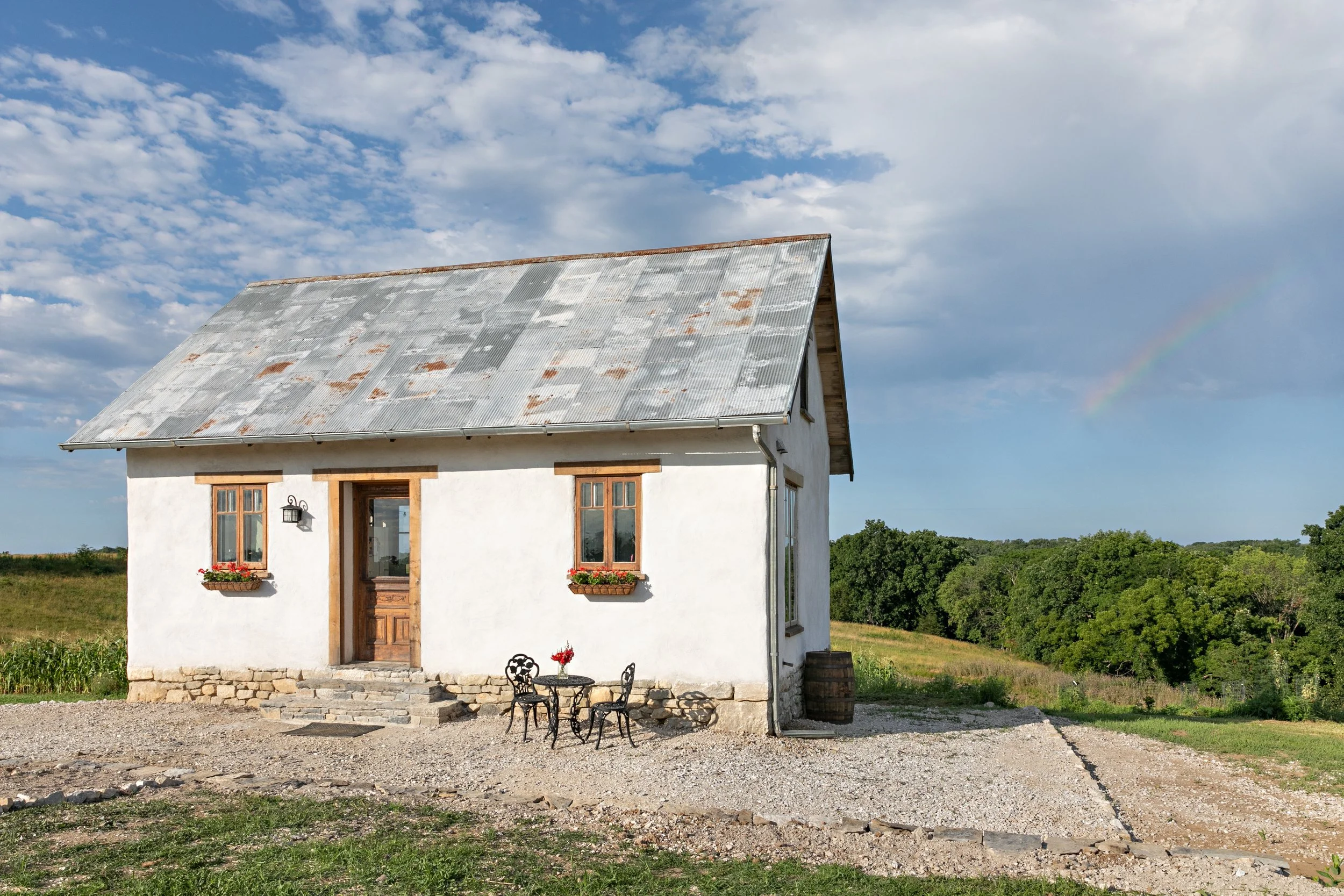
Vapor Permeable (over 10 perms). This is technically outside the code's regulated classes, but it's the category most natural finishes fall into: unpainted drywall, unfaced fiberglass batt insulation, and clay or lime plaster (GreenBuildingAdvisor; Natural Building Australia).
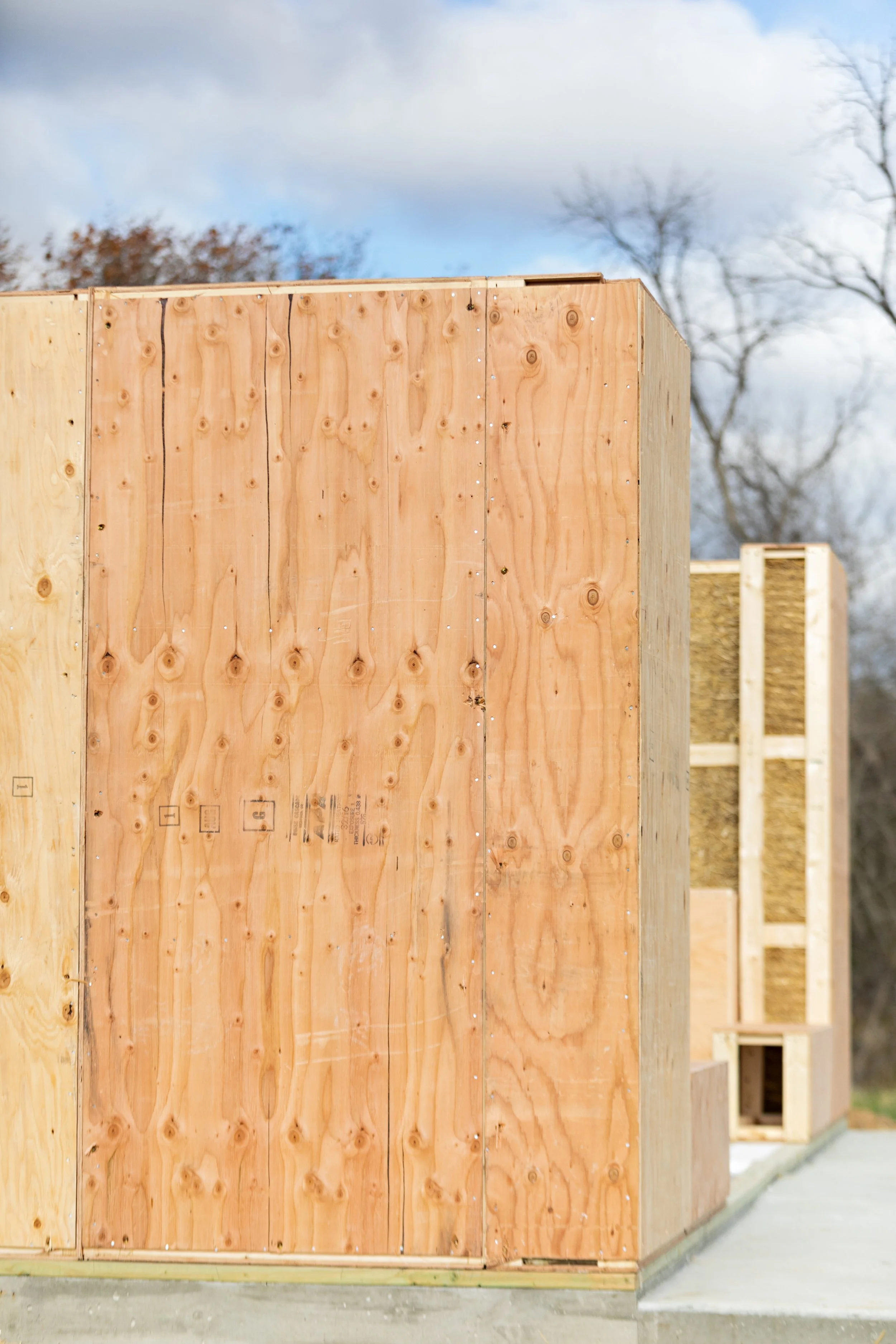
Wood-based sheathing like OSB and plywood is a bit more interesting. Tested dry, OSB usually lands in the Class II range. But wood is hygroscopic, meaning it absorbs and releases moisture, so its permeance climbs as humidity rises. Research from West Fraser found that 7/16-inch OSB measured around 2 perms at 50% relative humidity, but jumped to roughly 12 perms at 85% humidity (West Fraser technical note). In practice, that means OSB tightens up when conditions are dry and opens up as a wall gets damp, giving it a built-in adaptive quality.
Why this number matters
Water vapor is always moving through a building assembly, pushed along by differences in temperature and humidity between inside and outside. In winter, warm, humid interior air pushes outward toward the cold, dry exterior. In summer, in a humid climate, that direction reverses: hot, humid outdoor air pushes inward toward the air-conditioned interior.
Columbia sits in IECC Climate Zone 4A, a mixed-humid zone with meaningful heating and cooling seasons (U.S. Department of Energy, Building America Program; DOE Building America Climate Zones). That means a wall here has to handle vapor drive in both directions across the year, not just one.
A wall assembly can respond to that in one of two ways: block vapor movement entirely and manage moisture mechanically, or let vapor diffuse through and dry naturally in whichever direction conditions call for. Building Science Corporation, whose guidance underlies much of the current IRC vapor retarder language, has long recommended designing assemblies that can dry in at least one direction rather than trapping moisture between two low-permeance layers, sometimes called a "double vapor barrier" (BuildingScience.com, BSD-106).
High-performance natural building tends to favor the second approach: vapor-open assemblies on both faces that let a wall dry rather than trap moisture inside it. Understanding perm ratings is how you evaluate whether a given material is actually doing what a vapor-open assembly needs it to do, rather than just assuming it based on how it feels or looks.
Building Integrity’s wall panels can be finished out in a variety of ways to maintain vapor permeance. We have experience designing panels and wall assemblies for conventional finishes (plywood, siding, gypsum board) and natural plasters (clay, lime). We are happy to consult and help clients think through the right finishes for their project!
Sources
Pro Remodeler, "Vapor Permeance"
GreenBuildingAdvisor, "Vapor Profiles Help Predict Whether a Wall Can Dry"
BuildingScience.com, "IRC FAQ: Insulating Sheathing Vapor Retarder Requirements"
CertainTeed, "Vapor Retarders and Moisture Management"
GreenBuildingAdvisor, "How to Choose Insulation"
Natural Building Australia, "Vapour Permeability vs. 'Breathability' in Clay & Lime Surfaces"
West Fraser, "Water Vapor Permeance of Wood Structural Panels"
U.S. Department of Energy, Building America Program, Columbia, MO project climate summary
U.S. Department of Energy, Building America Climate Zones
BuildingScience.com, BSD-106: Understanding Vapor Barriers
